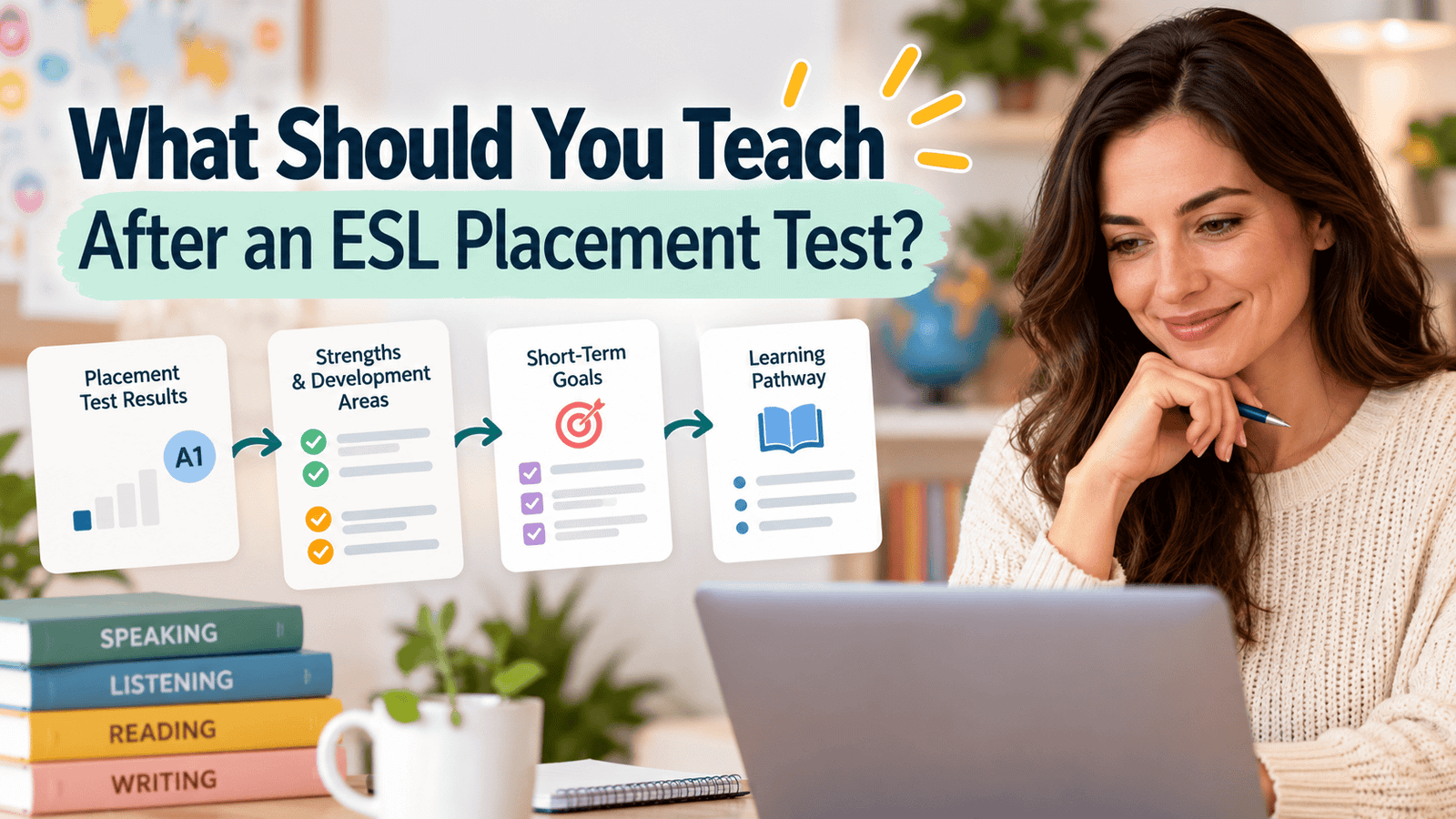
An ESL placement test gives you a starting point. The next step is to turn that result into a learning plan that tells you what to teach and helps parents understand where their child is going.
I like to keep that plan focused: a few strengths, a few areas for improvement, two or three short-term goals, and a curriculum pathway that supports those goals. You don’t want to overwhelm parents with every possible skill their child could work on.
Here’s how I build that plan inside the Florentis Learning Teacher Hub, using an A1 student, Anna, as an example.
What You’ll Learn
- Use placement results to identify a starting level, then prioritize skills around the family’s goals.
- Keep the plan focused with a few strengths, development areas, and connected short-term goals.
- Combine core and supporting curriculum according to the student’s level and topic familiarity.
- Share a parent-friendly plan with a clear learning commitment and practical next steps.
1. Create a Learning Plan From the Placement Assessment
From the Students tab, open the student’s profile and scroll down to the placement assessment. Next to the assessment, select Create Plan.
You can also do this immediately after completing an assessment. There is an option at the bottom of the assessment to create a learning plan, so assessment and planning can be part of the same workflow. If you’ve already completed the assessment, you can simply return to it through the student’s profile.
Start by setting the recommended learning commitment. For Anna, I’m choosing:
- Three classes per week
- 25 minutes per class
Those are the settings for this particular plan, not a requirement for every student. I usually teach 25-minute classes, but the form includes other class-duration options. If the duration you use isn’t available, you can reach out to request an additional option.
2. Choose a Few Meaningful Strengths
Anna’s assessment placed her at approximately A1 on the Common European Framework of Reference for Languages, or CEFR. In the Teacher Hub, the suggested strengths and areas for improvement are linked to that level and placement result.
That gives you a relevant set of options rather than making you write everything from scratch. You still need to choose the statements that accurately reflect the student.
For Anna, I’m highlighting two strengths:
- She can manage everyday expressions about familiar topics.
- With support, she can use basic time words such as today, yesterday, and tomorrow.
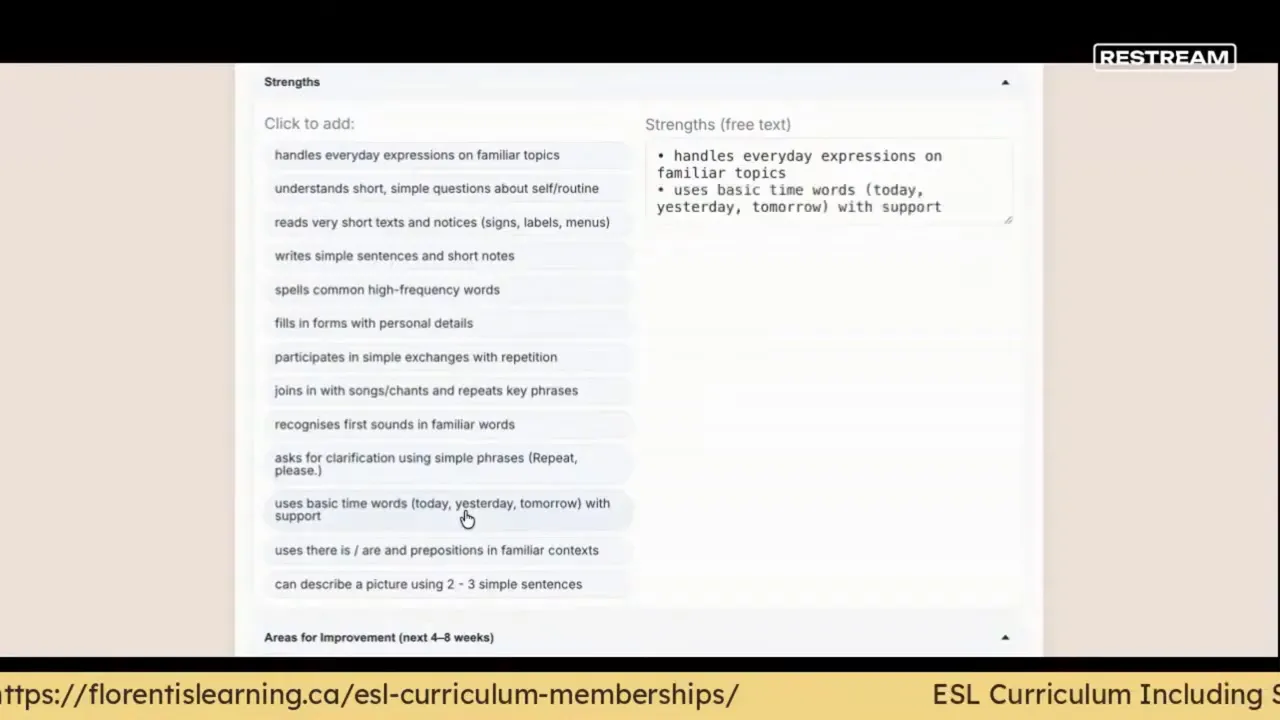
Choose just a couple of useful strengths. The point is to give parents a clear picture of what their child can already do, not to fill the plan with every available statement.
3. Match Areas for Improvement to the Family’s Goals
Next, select the skills you want to develop. For Anna, I’m choosing three areas:
- Extend sentence length when talking about routines and preferences.
- Ask simple follow-up questions.
- Begin referring to past and future time with support.
This is where I give particular thought to what the parent has told me. If the family’s priority is writing, I look for writing-related areas for improvement. If their priority is speaking, I choose skills that support speaking.
The placement result helps you identify an appropriate level. The family’s goals help you decide which skills to prioritize within that level. For more on understanding what families value, see what parents in different markets want from online teachers.
Use Language That Makes Sense to Parents
The suggested statements are customizable. You don’t have to keep the wording exactly as it appears.
For example, I might change a reference to “routines and preferences” into “daily activities and likes and dislikes.” The teaching focus is very similar, but the second version may be clearer for the particular parent receiving the plan.
That small adjustment matters. A learning plan should communicate your teaching priorities in language the family can readily understand.
The form also carries over a comment from the placement assessment. Review that existing comment alongside your selections so the plan reflects the student you assessed.
4. Turn Your Priorities Into Short-Term Goals
The short-term goal suggestions are also linked to the student’s CEFR level and are organized by listening, reading, speaking, and writing. The guidance in the form is to choose two or three bullets.
Because Anna’s plan is focused on speaking, I’m choosing speaking goals and connecting them closely to her areas for improvement:
- Talk about daily routines.
- Ask three basic questions to help keep a conversation going.
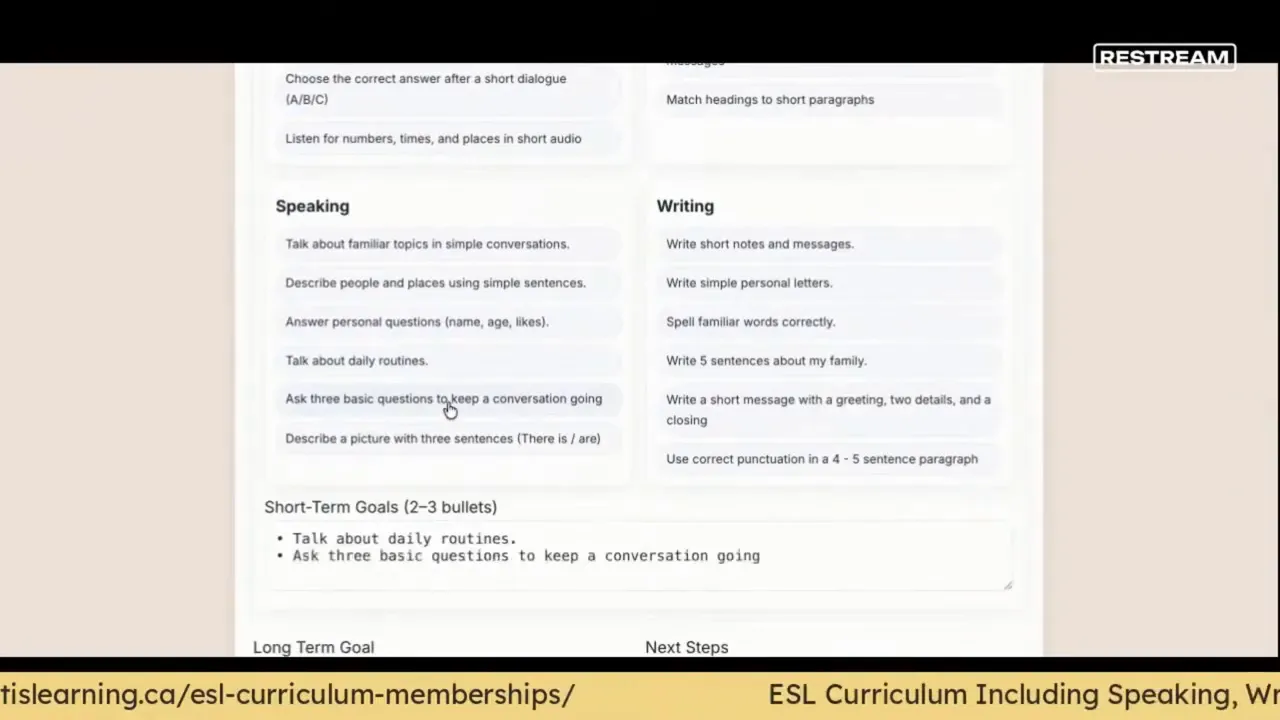
Notice the connection between the sections. If I’ve identified longer sentences about daily activities and simple follow-up questions as priorities, those same skills should appear in the goals. I’m not choosing a separate set of targets simply because they are available.
The form also provides a suggested longer-term A2 goal. You can use that suggestion or edit it to suit the student. It gives the plan a broader direction while the short-term goals keep the immediate teaching focus manageable. For writing-focused students, keeping an ESL writing portfolio with Book Creator can help you see whether those goals are showing up in their work over time.
At this stage, I also select the option to share the learning plan on the Parent Hub.
5. Choose Curriculum That Supports the Plan
Once you have your priorities and goals, choose the curriculum you’ll use to work toward them.
If you are choosing materials for a new student, you may also find my Stellar Readers curriculum overview and Diffit AI lesson-creation tutorial useful.
If you use the Florentis Learning curriculum, the placement assessment provides guidance on where to begin, including the starting unit. For Anna’s A1 result, I’m choosing Level 3 as her core curriculum.
I’m also adding the Beginner Speaking Curriculum, because speaking is a focus of this plan. You can select more than one curriculum pathway rather than limiting the student to a single strand.
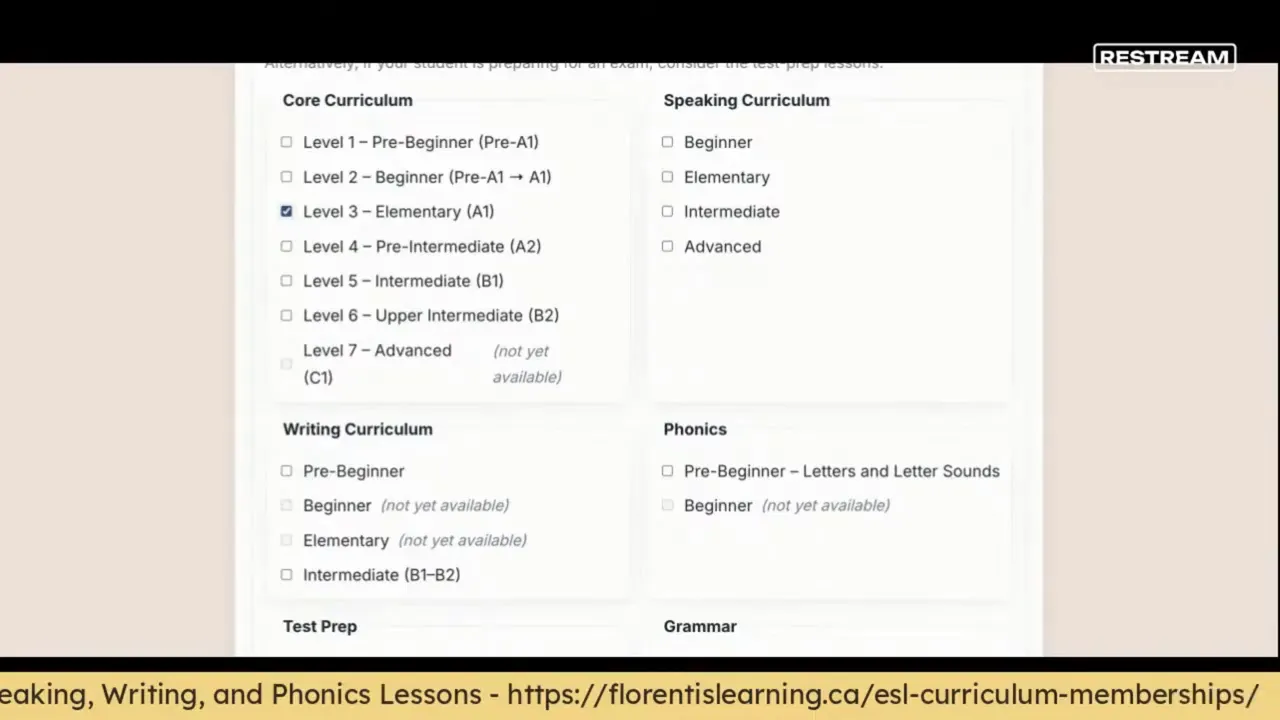
Beginner speaking lessons can be used alongside core Levels 2 and 3. Elementary speaking lessons may also fit alongside similar core lessons. The choice depends on the topics the student already knows and the topics they need to develop.
Use both the placement guidance and your knowledge of the student. The level helps you find a starting point, while topic familiarity helps you decide which supporting lessons make sense. For more curriculum ideas, read our Stellar Readers curriculum overview or how to create customized lessons with Diffit AI.
Curriculum availability and the selection form may not always be updated at exactly the same time. In this example, the first section of the Elementary Writing Curriculum and the second phonics level, the outer-space-themed Phonics Adventures, had been released but still needed to be added to the form’s choices.
Once the relevant curriculum options are selected, save the learning plan.
6. Review, Print, and Share the Learning Plan
After saving, you return to the student’s profile. The learning plan is now on file, with options to view, edit, or print it.
You can open the plan and then print it, but selecting Print Plan directly is the quicker route. The printable version opens in a new tab.
The finished document presents an English development roadmap for an eight-to-twelve-week period. It brings together the plan’s key information, including:
- A teacher summary generated from the level information.
- The recommended learning commitment, in this case three 25-minute classes per week.
- The selected strengths, development priorities, and goals.
- The curriculum recommendations.
- A next-steps section and the date the plan was prepared.
The printable layout removes the editing controls, leaving a document you can share with the family. This example uses test contact details, so review those details in your own document before sending it.
Don’t Leave the Next Steps Blank
One field I didn’t complete in this example was Next Steps. I usually recommend filling it in, even if the action is simple.
You might ask the parent to book lessons through your booking website or include something the family can do at home. The important thing is to make the next action clear, rather than ending with goals alone. If you’re building your own independent teaching practice, my guide to transitioning from classroom teaching to online teaching includes additional student onboarding guidance.
Finally, print the document to PDF and send it to the parents you’re working with.
Teach From a Plan, Not Just a Level
After an ESL placement test, the next lesson should come from the student’s assessed skills, the family’s priorities, and a small set of connected goals.
For Anna, that means Level 3 core lessons supported by beginner speaking lessons, with a focus on talking about daily activities, extending sentences, and asking simple questions. The learning plan turns an A1 result into a clear teaching direction and gives her family a practical picture of what comes next.
Ready to Build Your Own ESL Learning Plan?
Explore Florentis Learning to learn more about its Teacher Hub, placement assessments, curriculum, and tools for creating parent-friendly learning plans.
Post your Comment About This Product