One of my students has a writing portfolio with about 60 pieces of work collected over several years. I certainly didn’t start with a plan to collect 60 pieces. We just kept adding to it.
Now I can go back to his earlier paragraphs and compare them with much longer, more sustained writing. I can see how he has learned to develop ideas, organize several paragraphs, and work with more abstract topics. More importantly, he can see it, too.
That is much harder when a student’s writing is scattered across worksheets, documents, and different online tools. I use Book Creator to keep that work together, but it also gives us somewhere to revise writing, continue stories, and return to skills we are learning.
This isn’t about using every feature. It’s about a simple way to support ESL writing, from a five-year-old’s first scaffolded pieces to an ongoing superhero story that became increasingly ridiculous.
Key Takeaways
- Dated writing portfolios make gradual progress easier for students, teachers, and parents to see.
- Keep original and revised work to distinguish the student’s starting point from supported development.
- Ongoing stories create repeated opportunities to practise writing skills within a personally meaningful project.
- Use patterns across several pieces to choose focused goals rather than correcting every error.
Table of Contents
- Keeping Writing Together Makes Long-Term Progress Visible
- A Writing Portfolio Can Start Before Paragraphs and Essays
- Use an Ongoing Story to Give Writing Skills a Purpose
- How I Start a New Student Writing Portfolio
- Look for Patterns to Decide What to Teach Next
- Show Parents the Progress Instead of Only Describing It
- Keep the System Useful, Not Complicated
Keeping Writing Together Makes Long-Term Progress Visible
When you teach the same student every week, progress can be surprisingly easy to miss. I’m usually thinking about what we’re working on now, not remembering exactly what the student could do three years ago.
A portfolio gives me something concrete to compare.
In one student’s early piece, An Interesting Person I Know, he was already producing a developed paragraph. He used sequencing phrases such as first of all, secondly, and finally to organize his ideas. In another early piece, I Don’t Like the Dark, he explained his reasons and added details.
So this wasn’t a student who couldn’t write when we began. He had plenty of ideas and a good foundation. Keeping the work lets me see what developed from that starting point.
Several years later, his piece about the expression Every Cloud Has a Silver Lining tackles a more abstract idea. He explains the expression, connects it to his own experience, develops what happened, and returns to the main idea at the end.
In Social Media Brings People Together, the development is different again. He:
- Introduces his position.
- Develops separate supporting ideas.
- Considers a negative side.
- Returns to his opinion in the conclusion.
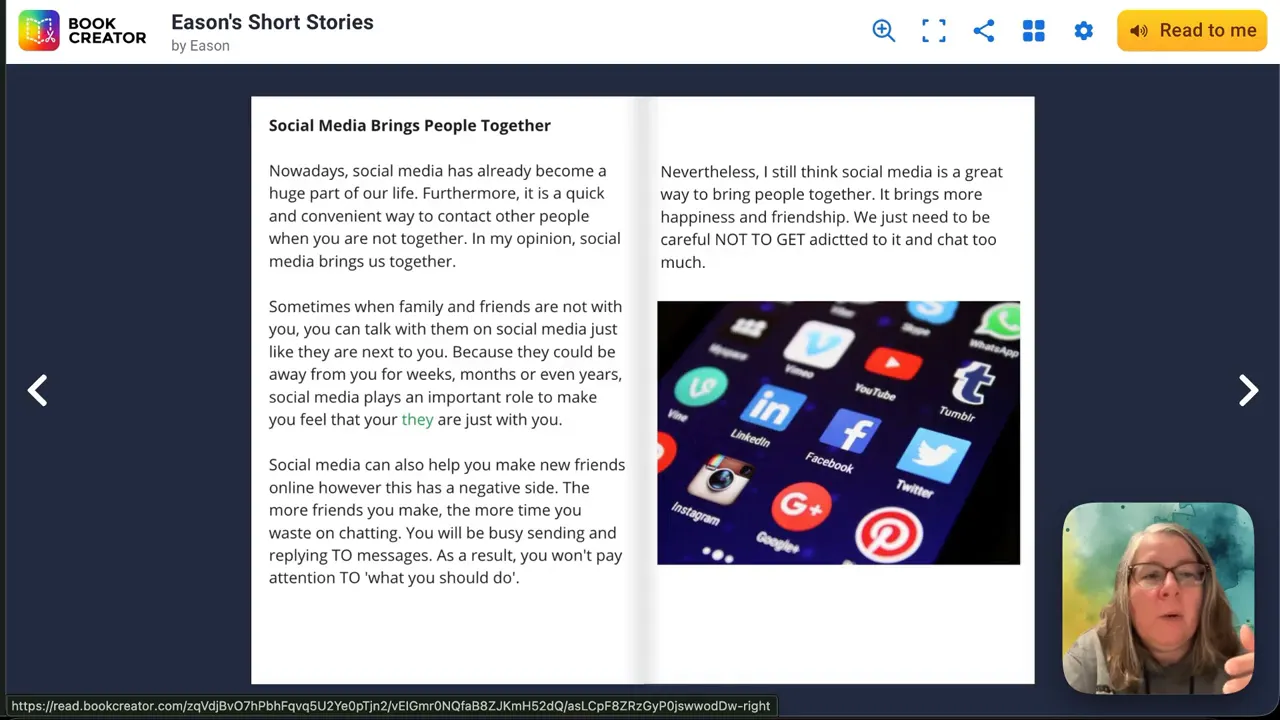
The value isn’t simply seeing that the writing has become longer. It is seeing what the student can now do with ideas. Putting an early paragraph beside a later piece gives both of us a much clearer picture than relying on memory.
A Writing Portfolio Can Start Before Paragraphs and Essays
I’ve also started a portfolio with a student who was five. Obviously, that book looks quite different.
Some entries are screenshots of work she created elsewhere. Others are much more scaffolded, such as a letter to Santa with a structure for her to work within.
I’m not expecting a five-year-old English learner to independently produce a complete letter. But the language she contributes within that structure is still part of her writing development. It belongs in the portfolio.
Drawings, short pieces, and supported writing can all have a place. A young learner doesn’t need to reach a particular writing level before there is something worth keeping.
Keep the Original and the Revised Version
One example I particularly like is a short piece about the Dragon Boat Festival. The original consisted of three simple sentences identifying the festival, giving a general location, and saying that people could be seen on dragon boats.
We revised it together. We added that the festival was in China, made the location more specific, developed what people were doing, and included a short personal response about how enjoyable the event was.
I kept both versions.
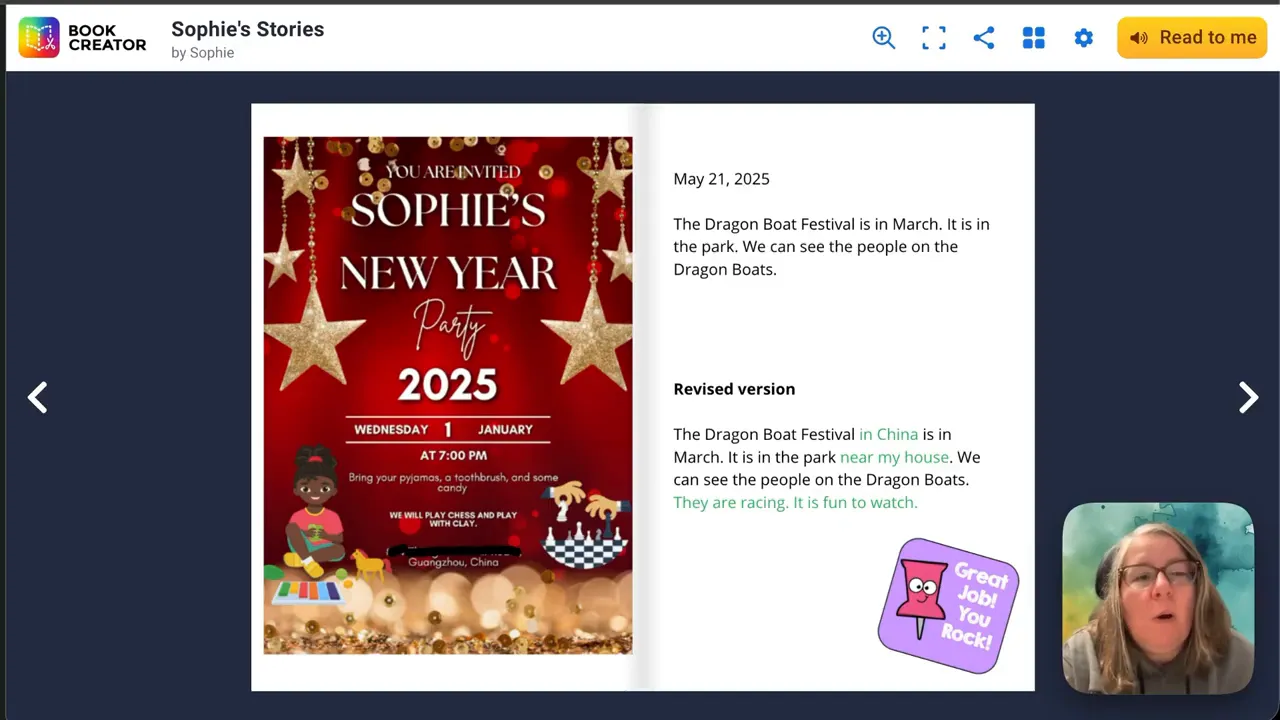
If the portfolio contains only perfectly corrected pieces, I lose part of the story. I want to see what the student produced and what happened when we worked on that writing together.
Those are related, but they aren’t the same thing. A revised piece shows what we developed with support. The original helps me remember what the student was able to produce at that stage.
A useful writing portfolio is a record of development, not just a collection of polished final products.
Use an Ongoing Story to Give Writing Skills a Purpose
Another student had a weekly writing class with me and decided that he wanted to keep writing one enormous story.
There was a superhero called Superhero-Lightning. There were magical moon rocks that gave people special powers when they ate them. At one point, the Earth was cut in half.
It got a little out of hand.
But I mostly let him run with it because he wanted to know what happened next. And that meant he wanted to keep writing.
His investment in the characters and plot gave me opportunities to introduce skills inside something that already mattered to him.
Dialogue Became Something We Could Keep Practising
At one point, we began working on dialogue. We talked about how to show that a character is speaking and how quotation marks work within a story. Then he started using it.
Instead of practising dialogue once on a worksheet and moving on, we could return the following week and look at how he had used it in the next chapter.
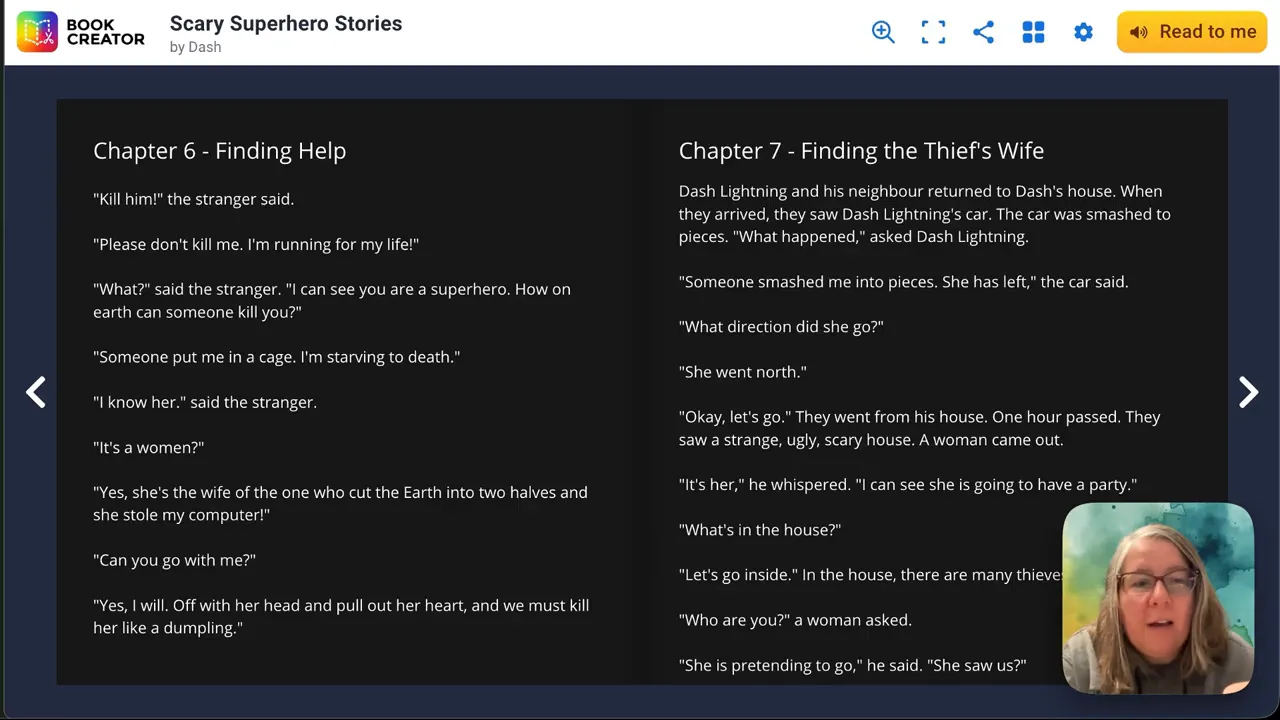
By the later chapters, dialogue had become a regular part of his storytelling. It still wasn’t perfect, and that was fine. We had his own writing to work with.
We could find a place where the dialogue worked well, identify something that needed fixing, and give him another opportunity to use the skill as the story continued. For a separate reference on the punctuation conventions, Purdue OWL’s quotation mark guide is useful.
Was this story destined to become a great work of literature? Probably not. But he was writing every week, developing his own characters and plot, and using new skills as they became useful to him.
I wasn’t designing activities because I needed something to put into Book Creator. We were doing the writing anyway. The book simply gave that writing somewhere to live and grow.
How I Start a New Student Writing Portfolio
A new portfolio doesn’t need an elaborate cover or a complicated system. With a current six-year-old student, Joe, I started with his first writing sample and then added a recent assignment about his dream home.
That was enough. Two pieces make a perfectly reasonable beginning.
1. Create a Simple Book
I open a new book, choose a size that works for the material, and select a theme if I want one. For Joe’s portfolio, I used the notebook template.
I usually name the book after the student. I leave the cover for us to personalize together so that it becomes something the student wants.
The format can change later. Getting the writing into the book matters more than deciding on the perfect design.
2. Add the First Writing Sample and Its Prompt
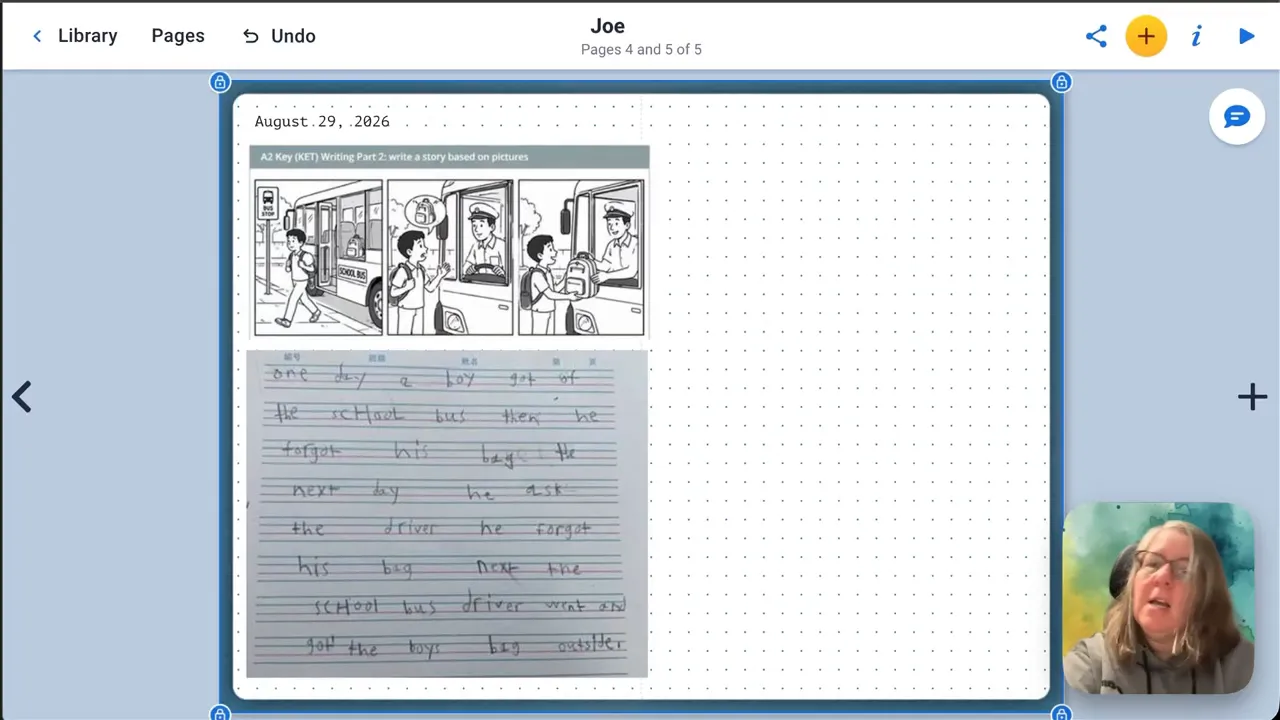
For Joe’s first entry, I imported a photo of his handwritten work. I also included the assignment because it was based on a picture.
I wanted to retain that picture and the essential instructions. They provide context for the writing. I could resize and crop the imported images so that the prompt and response fit together on the page.
He hadn’t used capital letters in this piece. I didn’t need to turn it into a polished final product before saving it. I wanted a record of his starting point.
3. Give the Piece a Title and a Date
Dating the work is one thing I have learned to be much more consistent about.
I didn’t date the entries in the portfolio that eventually reached 60 pieces. That becomes surprisingly important when you suddenly realize you have been teaching the same student for several years.
For a new portfolio, I want a title and date so I can identify the work and know when the student wrote it. Six months or a year later, that information makes comparisons much more useful.
4. Add Writing That Grows Out of Your Lessons
Joe’s second entry came from a Florentis Learning unit about homes. Before writing, we had learned language for different types of homes, their features, and descriptive vocabulary.
Then we worked on a dream home assignment.
He wasn’t starting with a blank page and an instruction to write about his dream home. He had:
- A topic we had already explored together.
- Vocabulary available to use.
- A visual to work from.
- A template to provide structure.
- Time to talk through his ideas before writing.
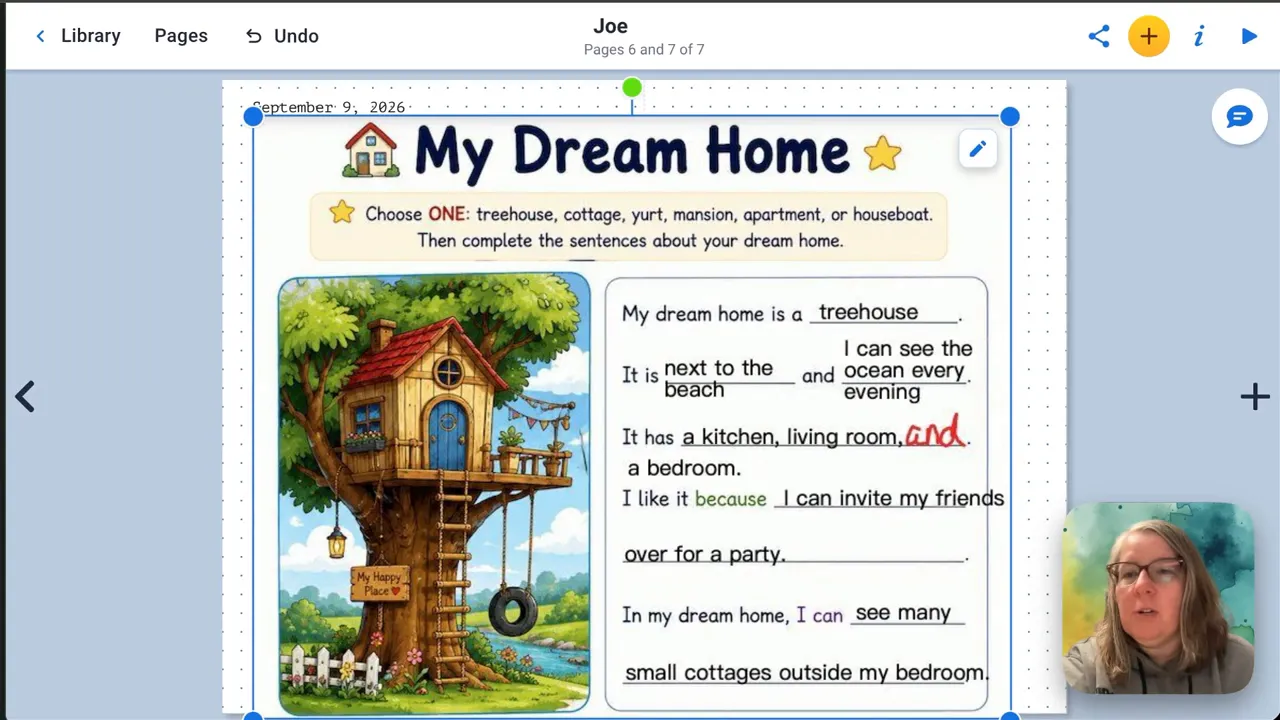
I added this as his second entry and dated it. I might adjust the layout or crop the image to make it neater, but I don’t want to polish the writing so thoroughly that I can no longer tell what he could do.
Maybe this book will eventually contain 60 pieces. It doesn’t need 60 pieces to be worth starting.
For another way to turn assessment information into practical teaching goals, see what to teach after an ESL placement test.
Look for Patterns to Decide What to Teach Next
As a portfolio grows, I’m not only collecting writing. I’m looking for patterns.
Perhaps a student is beginning to use more interesting vocabulary, but nearly every sentence follows the same structure. Perhaps there are plenty of ideas, but the organization makes them difficult to follow. Later, when we begin writing about past events, past tense verbs might become an obstacle.
Those patterns give me somewhere to go next.
I can also make that next step explicit with the student. We might choose a simple goal such as using because to explain an idea. The next time we write, we return to that goal.
Eventually, I can look across several pieces and ask whether the skill is beginning to appear without a reminder from me.
That is much more useful than trying to correct every possible error in every piece. The portfolio helps me see what the student is learning to use, not simply what is still wrong.
Show Parents the Progress Instead of Only Describing It
Parents love these books. They are easy for me to share, and a parent can open the book and look through what their child has been writing.
There is a practical distinction in my own online teaching. Students can technically write directly in Book Creator, but some of my students in China have difficulty accessing the site. We therefore tend to use it together during class. In my experience, the shared reading links have been easier for parents to access.
Sharing the book is different from sending a message saying that a child’s writing is improving. I can show an earlier piece, move forward to a later one, and let the parent see the difference.
This works with younger learners, too. Parents can see a drawing, a scaffolded letter, an original writing sample, and the version we revised together.
The work isn’t disappearing at the end of each lesson. It is becoming part of a book that grows with the child.
Especially when teaching independently, I find it valuable to make progress visible. Parents don’t have to rely only on my description. They have examples in front of them.
For targeted writing activities with older or more advanced learners, see my guide to teaching word formation in ESL.
Keep the System Useful, Not Complicated
After using writing portfolios with different students, these are the habits I would keep:
- Save selectively. Some writing is simply practice. Keep enough to show development without creating another job for yourself.
- Date every piece. Dates make the progression clearer for you, the student, and their parents.
- Preserve original writing. Revise together, but don’t replace every original with a perfectly edited version.
- Bring work in from elsewhere. Add screenshots, photographs, imported pieces, and student drawings. The writing does not all need to happen inside Book Creator.
- Build the book during lessons when practical. I often add work with students, and they enjoy seeing their books develop.
Book Creator offers a free teacher option with a limited number of books. For my purposes as an independent teacher, that allowance has generally been enough.
But the most important part isn’t the tool. It’s keeping meaningful examples together without editing them until they sound like me.
My usual sequence is simple: we learn the language, practise it together, and then use writing to do something more personal with it. The portfolio gives us a place to keep that work, return to it, and notice how it changes.
|
Watch the Book Creator Video
See Book Creator in action in this video:
Post your Comment About This Product