I started teaching one-on-one lessons and slowly moved into group classes. Over time I realized that while live teaching is deeply rewarding, it is also time limited. You can only be in so many lessons at once. If you want freedom, scalability, and the ability to reach more students without adding dozens of extra teaching hours to your week, creating a course is one of the best steps you can take.
In this article I will walk you through how to know if you are ready to create a course, the types of classes you can build, how to choose the right course format for your goals and lifestyle, and practical steps for turning your teaching knowledge into a sellable, sustainable product. I will also share common mistakes I see teachers make and a clear checklist you can use to decide whether now is the right time for you.
Why consider creating a course?
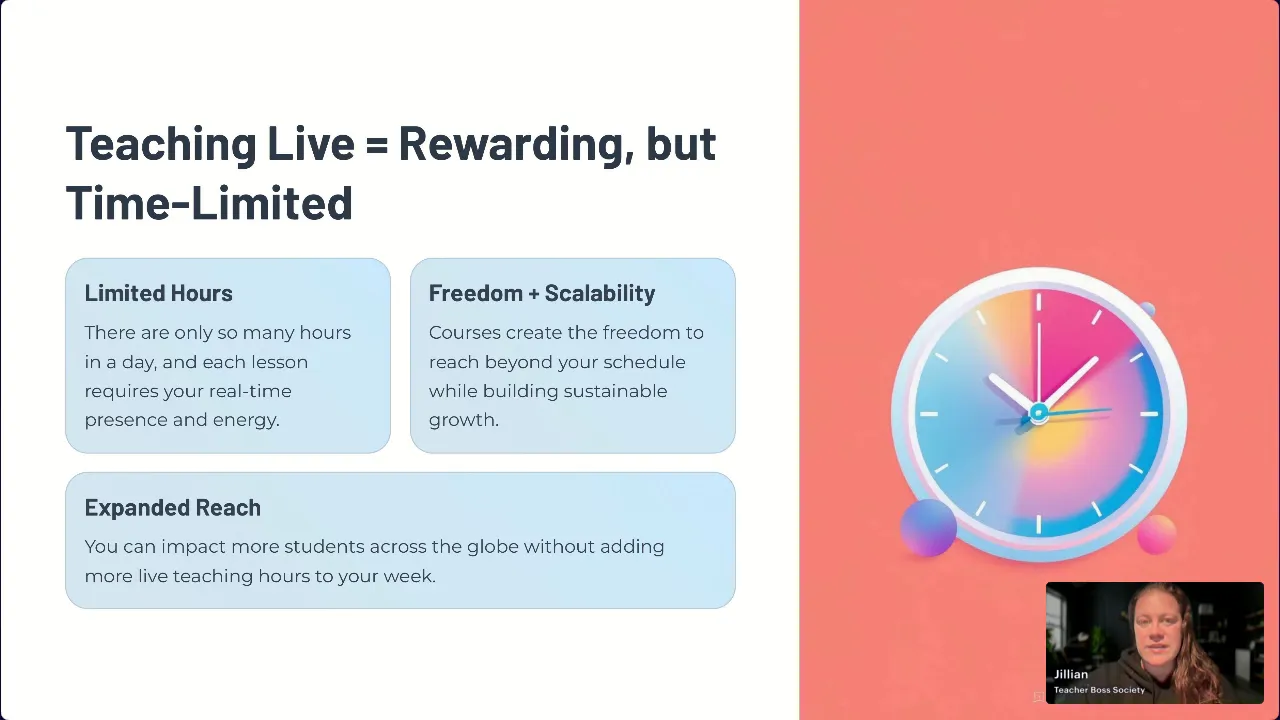
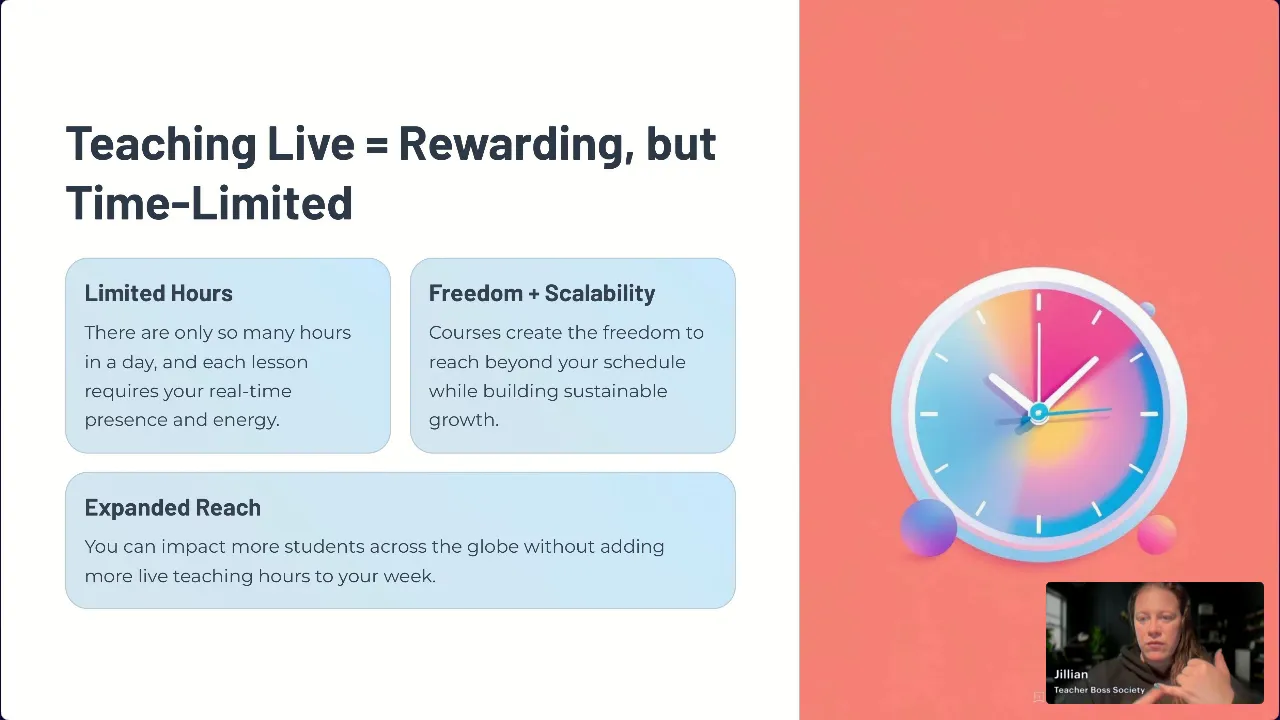
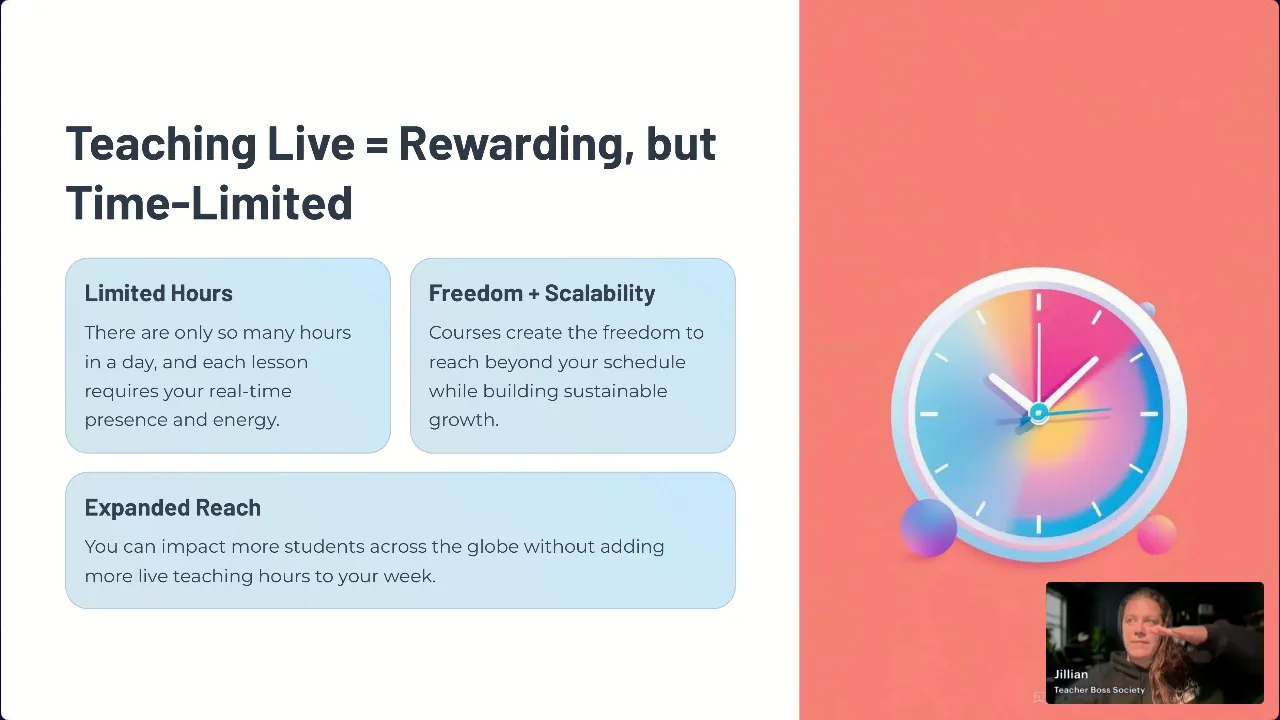
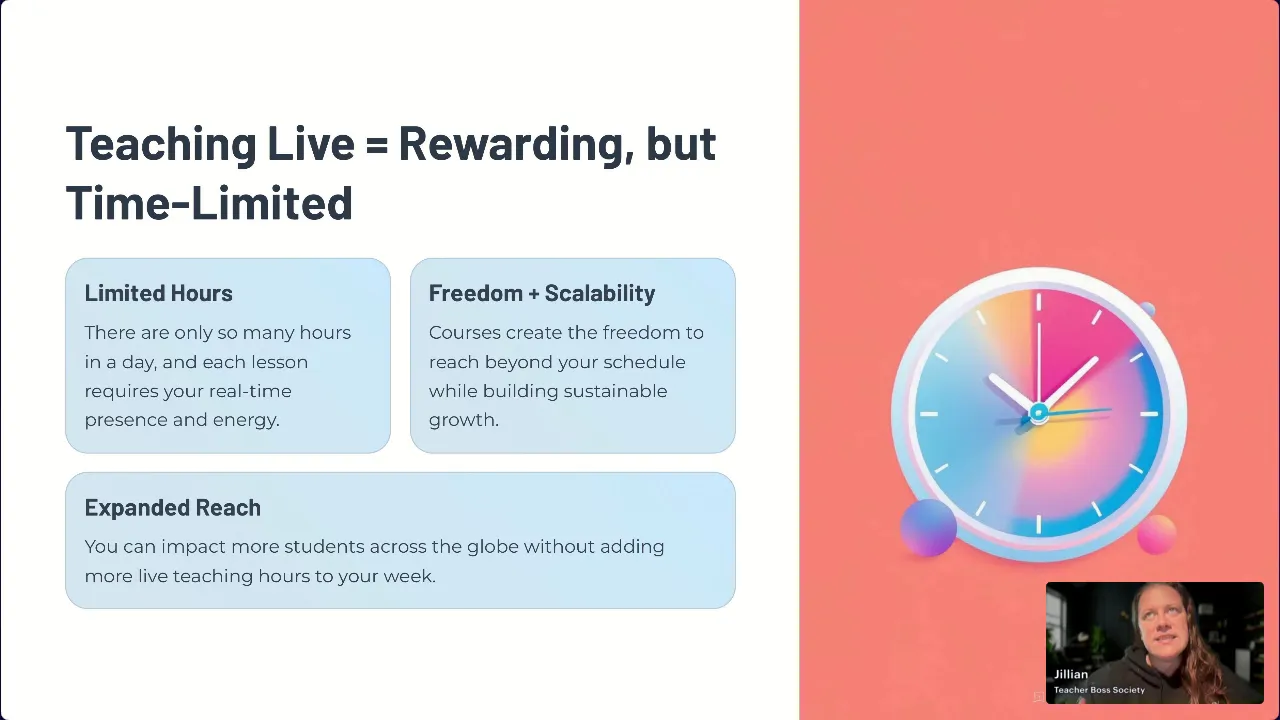
Teaching live — whether one-on-one or in small groups — is emotionally rewarding. You get instant feedback, you adjust in real time, and you build relationships. But there are clear limits. As I often say, “teaching live is rewarding, but it’s time limited.” Every lesson requires your real-time presence and energy, which can be draining. There is a cap to how many students you can help at once.
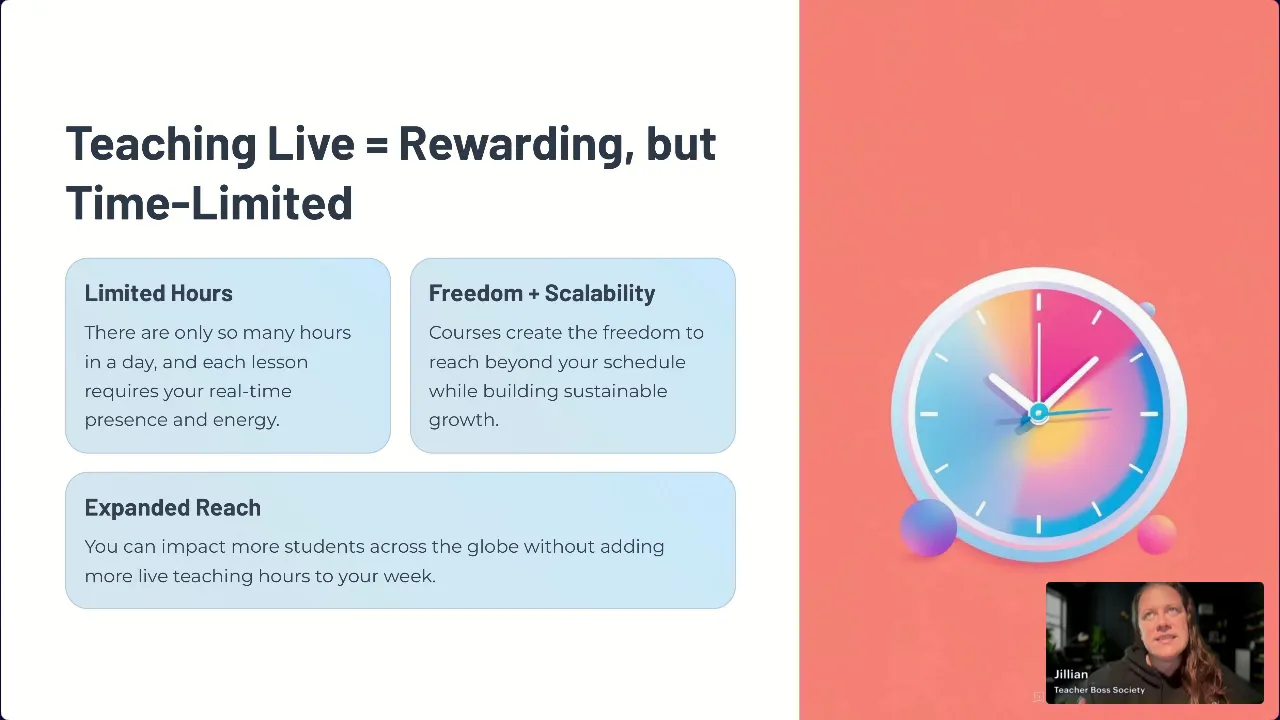
Courses flip that model. They create freedom and scalability. With a well-built course you can reach beyond your weekly schedule, offer students flexibility, and grow your income without adding equivalent teaching hours. You cannot say “I’m fully booked” when your course is available to dozens or hundreds at once.
That does not mean live teaching is inferior. It just means it serves a different purpose. Live lessons offer bespoke learning and connection. Courses offer access, consistency, and a path to scale what you already do well.
Common course types for online teachers
Not all courses are created equal. When I talk about creating a course, I am talking about a range of options that fit different teachers and different student needs. Here are the main types to consider:
1. Evergreen self-paced course
This is pre-recorded content students can buy and start at any time. It is the most scalable format because you record once and it can sell repeatedly. You can include video lessons, downloadable worksheets, quizzes, and templates. Evergreen courses are great if you want predictable content, passive income, and the ability to improve content over time without being tied to live sessions.
2. Cohort-based course
Cohort-based courses open for enrollment at scheduled times and students go through the material together. You may include weekly live Q&A sessions, group forums, and peer accountability. This format blends community and structure, often leading to better completion rates because students move together through deadlines. Cohorts let you maintain some live interaction without running one-on-one lessons for everyone.
3. Hybrid course (pre-recorded plus live)
Hybrid models combine pre-recorded lessons with occasional live workshops or office hours. This gives students the convenience of self-paced learning with the benefit of live support. It is a flexible option for teachers who want to scale but still enjoy interacting with students.
4. Live group class (recurring)
These are scheduled group lessons that run live, perhaps for a semester or a set number of weeks. Think of them as an amplified version of your private lessons. They can be priced lower than one-on-one lessons but higher than a purely self-paced course because students get live interaction.
5. Micro-courses and paid workshops
Short, focused courses that solve one specific problem — for example, “How to hold attention for 30 minutes of English conversation” — are micro-courses. They are quick to produce and perfect for lead generation or converting existing students into higher-value customers.
How to know if you are ready to create a course
Not every teacher needs to jump into creating a course immediately. Creating great courses requires planning, content creation, and a basic tech setup. Here are practical questions to ask yourself before you start.
Do you have a clear, repeatable teaching process?
Courses should teach a repeatable skill or system. If you can reliably help students achieve a result with a predictable sequence of lessons, you already have the raw material for a course. For instance, if you always follow the same progression when teaching pronunciation or beginner grammar, that structure can be turned into an online curriculum.
Do you have existing students or an audience?
Having a group of students or a small audience reduces the risk of launching a course. Even a handful of loyal students who love your teaching can become your first beta testers. Many teachers who scale into courses were already fully booked with one-on-one or group lessons and used their existing client base to test the course idea. As I often share, teachers in supportive communities have gone through challenges and become fully booked before expanding into courses.
Can you commit time to produce and launch content?
Recording lessons, editing videos, creating downloadable materials, setting up a course platform, and launching take time. If your schedule is already stretched, consider starting with a micro-course or hybrid model that requires less upfront content creation. The launch phase, where you promote the course and enroll students, is also time intensive.
Are you willing to learn some tech basics?
Creating a course does not require you to become a tech wizard, but you should be comfortable with basic tools: recording video, uploading files, using a course platform or learning management system, and managing payments. Many teachers use platforms that simplify these tasks. If tech feels overwhelming, partner with someone who can help or start with simple platforms that require minimal setup.
Are you clear on the outcome you will promise?
Courses sell when they promise a clear outcome. Avoid vague pitches like “improve your English.” Instead, offer specific transformations such as “speak confidently in 5 everyday conversations” or “master present simple for daily communication.” The clearer the result, the easier it is to design lessons and convince students to enroll.
How to choose the right course format for you
Choosing a format comes down to balancing your goals, your time, and your audience’s needs. Below is a decision framework I use when advising teachers.
- If you want passive income with minimal ongoing work: choose an evergreen self-paced course.
- If you want community and higher completion rates: choose a cohort-based course or hybrid model.
- If you love teaching live but want to reach more people: scale group classes or run recurring cohorts.
- If you want a quick test before investing heavily: create a micro-course or a paid workshop.
Remember, you do not need to commit to one forever. Many teachers start with a micro-course, graduate to a hybrid model, then convert it into an evergreen product while still running periodic cohorts to engage new students live.
Practical steps to create your first course
Below is a step-by-step blueprint you can follow. I have used this structure myself and with teachers in the Teacher Boss Society who are building businesses and going through enrollment challenges.
Step 1: Define the transformation
Write a short statement that clearly states what the student will get. Use this formula: “By the end of this course, students will be able to X so they can Y.” For example, “By the end of this course, students will be able to hold a 5-minute conversation in English so they feel confident speaking in daily situations.”
Step 2: Outline the curriculum
Break the transformation into 6 to 12 lessons or modules. Each module should have one clear objective and a practical activity or assignment. If you plan a cohort, decide what day each module will be released and what live elements you will include.
Step 3: Create core content
Start with the lessons that carry the most weight — the ‘big domino’ content that, once learned, lets the rest fall into place. Record video lessons in short chunks (5 to 15 minutes each). Short lessons are easier to consume and re-record if you need changes later.
Step 4: Build materials and practice activities
Include worksheets, scripts, example dialogues, and practice prompts. Students value materials they can use repeatedly. These resources boost perceived value and help students apply what they learn.
Step 5: Choose a platform
Options range from course platforms that host content and process payments to simple membership sites or even a shared Google Drive plus a payment processor. Pick what fits your budget and comfort level. Many teachers start with a simple system and migrate to more feature-rich platforms as enrollment grows.
Step 6: Price your course
Pricing depends on format, length, and expected outcomes. Evergreen self-paced courses typically cost less than cohort or hybrid courses that include live components. Consider your existing rates: if your one-on-one lessons cost $X per hour, a course that delivers 10 hours of guided learning plus materials priced at a fraction of that total can be an attractive option for students and still be profitable for you.
Step 7: Plan your launch
A launch is an enrollment period where you actively promote and enroll students. Use email, social media, and your existing students. Consider offering early-bird pricing or bonuses for those who enroll during the first launch. If you do not have a mailing list, reach out to your current students and invite them to a free webinar or workshop that leads into the course.
Step 8: Gather feedback and iterate
Run a pilot with a small group at a reduced price or for free in exchange for feedback. Use their experience to improve lessons, fix confusing parts, and refine your materials. Successful courses evolve based on real student data.
How to market your course without burnout
Marketing does not need to be overwhelming. Focus on simple, consistent actions that build trust and visibility over time.
- Start with your existing students: They already trust you and are the easiest people to convert. Offer a special rate or invite them to pilot the course.
- Use free content as a funnel: Short social posts, a free 20-minute workshop, or a downloadable student magnet can attract potential students and position you as an expert.
- Run a challenge: A short challenge provides quick wins for participants and naturally leads into a course that expands on what they learned.
- Collect testimonials: Social proof from real students boosts conversions. Ask your pilot students for short quotes and permission to use them in your marketing.
- Be consistent: Consistent content creation — even 1 to 2 posts per week — builds visibility without burning you out.
Common pitfalls and how to avoid them
Teachers often stumble in predictable ways when creating courses. Here are common mistakes and how to steer clear of them.
Mistake: Trying to teach everything
Solution: Focus on one clear outcome. A big mistake is creating a course that is unfocused and attempts to solve every student problem. Narrow your scope to one transformation and deliver it well.
Mistake: Overcomplicating technology
Solution: Pick one platform you can manage and learn it well. Simple beats complex when you are starting out. You can always upgrade tools later.
Mistake: Skipping testing
Solution: Run a pilot. You will learn so much from the first group about pacing, content clarity, and student needs. Use their feedback to refine the course.
Mistake: Undervaluing your time
Solution: Price thoughtfully. Many teachers undercharge because they equate time with value. A course that delivers transformation and saves students time and stress can be priced accordingly.
Mistake: Launching without a plan for student support
Solution: Decide upfront how students will ask questions and get help. Will you host weekly office hours? A private community? Email support? Clear support structures improve student outcomes and satisfaction.
What to expect after you launch
Expect the first launch to be full of learning. You will likely make small content changes, adjust pricing or bonuses, and clarify sales messaging. This is normal. What matters is collecting student feedback and improving the experience.
Over time you can diversify: run live cohorts for premium pricing, keep an evergreen version for passive income, and offer one-on-one coaching for students who want personalized help. Each offering feeds the others and creates a resilient business that does not depend solely on live teaching hours.
Checklist: Are you ready to create a course?
Use this checklist to make a quick decision. If you answer yes to most of these, you are ready to begin.
- I can state one clear transformation my course will deliver.
- I have a repeatable teaching process I can turn into lessons.
- I have at least a small audience or students who might be interested.
- I can commit the time to record, build materials, and launch.
- I can handle basic tech tasks or am willing to learn/get help.
- I have ideas for simple marketing: an email, a free workshop, or social posts.
- I have a plan to support students during the course.
If you checked most of those boxes, start by outlining a 6-module mini-course or a weekend workshop. Launch it as a pilot, learn fast, and iterate. That path minimizes risk and gives you the confidence to scale into larger offerings.
Examples of starter course ideas for online teachers
To spark your creativity, here are practical course ideas teachers can build quickly. Each one focuses on a tangible student outcome:
- Beginner Conversation: “10 Everyday Dialogues to Start Speaking Now”
- Pronunciation Starter: “Clear Vowels for Confident Speaking”
- Grammar Plug-in: “Present Simple Mastery in 4 Weeks”
- Lesson Design for Teachers: “Create Engaging 30-Minute Lessons”
- Classroom Management Online: “Keep Young Learners Focused & Happy”
- Teacher Productivity: “Scale Your Teaching Business Without Burning Out”
Final thoughts: Courses as a path to freedom and growth
Creating a course is not a shortcut. It is a different kind of work that requires clarity, planning, and some upfront effort. But the benefits are real: courses allow you to scale your impact, generate income without adding proportional hours, and create flexibility in your schedule.
Many teachers who are fully booked with one-on-one or group lessons have created courses to grow beyond their schedule. If you are teaching now and feeling capped by time, a course — whether a micro-course, hybrid, cohort, or evergreen — could be the next step.
Start small. Define one clear outcome, outline your modules, and test with a pilot cohort. Use feedback, iterate, and expand. Over time, you can build a suite of offerings that fit different student needs and price points. That is how you move from trading time for money into building a sustainable teaching business that supports both your students and your life.
If you are ready to take the next step, make a simple plan today: pick your transformation, outline six lessons, and schedule a weekend to record the first module. Small consistent steps will get you there.
Leave a Reply