

Introduction
If you’ve been posting on social media, improving your lessons, tweaking your prices, and still not getting consistent students… you’re not alone. Most online teachers aren’t struggling because they’re bad at teaching — they’re struggling because no one ever showed them how the business side of teaching actually works.
The truth is: getting students is a skill, and once you understand what’s going wrong, everything gets easier. This blog breaks down the seven most common mistakes online teachers make (without even realizing it) and shows you exactly what to do instead.
By the end, you’ll know how to fix the gaps, simplify your strategy, and finally start getting students in a way that feels clear and doable.

Mistake 1: Not Having a Clear Niche
Most teachers who struggle to get students fall into the same trap: they try to teach everyone. When your audience is “anyone who wants to learn English,” your content becomes generic, your messaging becomes confusing, and parents have no idea whether you’re the right fit.
A clear niche isn’t about limiting yourself — it’s about making it obvious who you help and why you’re perfect for them.
When your niche is clear:
- Your content becomes easier to create
- Parents instantly understand your value
- You stop competing with every teacher on the internet
- You attract the RIGHT students instead of chasing anyone who will book a trial
And yes — this is exactly why Day 1 of the 21-Day Teacher Start-Up Challenge is all about choosing your niche. It’s that important. If you don’t know who you teach, everything else you build (pricing, content, marketing, even your profile) becomes harder than it needs to be.
If you want help choosing your niche in a simple, structured way, you can join the challenge. The first 7 days are free, so you can decide if it’s right for you. Click here to join the 21-Day Teacher Start-Up Challenge.
Mistake 2: Not Charging Enough (or Not Choosing Prices at All)
One of the fastest ways to repel potential students is to underprice your classes. Most teachers think that lowering their rate will make parents more likely to book, but the opposite usually happens.
When your price is too low, parents worry:
- “Why is it so cheap?”
- “Are they inexperienced?”
- “Will the quality be good?”
Low pricing signals low confidence, and parents want a teacher who knows their worth.
Another huge problem? Many teachers don’t choose a price at all. They say things like:
- “I’ll figure it out once I get students.”
- “I’ll start low and raise it later.”
- “I’ll wait until I’m more experienced.”
But without a price, you can’t:
- Create offers
- Build your booking page
- Set your terms
- Post content confidently
- Sell ANYTHING
Pricing is a foundational decision — not a later one.
Mistake 3: Posting Random Content With No Plan
One of the biggest reasons teachers don’t get students from social media is simple: their content has no structure. They post whatever idea pops into their head that day — a worksheet here, a grammar fact there, a photo of their desk, a random tip… and none of it leads parents toward booking a class.
Random content doesn’t convert because:
- Parents can’t tell what you actually teach
- Your posts don’t build trust or authority
- There’s no clear message or theme
- Nothing shows how you can help their child
Parents aren’t scrolling social media thinking, “I hope I find a fun worksheet today.” They’re thinking:
- “Can this teacher help my child improve?”
- “Do they seem confident and experienced?”
- “Do I understand what they offer?”
Without a content plan, parents get confused — and confused people don’t book.
The solution is having simple content pillars that guide what you post. For online teachers, the most effective pillars are:
- Education: Show what and how you teach
- Connection: Share stories, personality, and student wins
- Authority: Teach something small that shows your expertise
When you rotate through clear content categories, your posts start working for you instead of disappearing into the void.
Mistake 4: Not Optimizing Their Profile
Your profile is your storefront — and most teachers don’t realize how many parents click away simply because their profile doesn’t clearly communicate who they are or what they offer.
A poorly optimized profile usually has:
- A vague or confusing bio
- No clear CTA
- No mention of what they teach
- Random emojis or clutter
- A profile picture that doesn’t build trust
- No pinned post explaining their services
When parents land on a profile like this, they think:
- “What does this teacher do?”
- “Are they teaching kids or adults?”
- “Do they offer private classes?”
- “Where do I book?”
If they can’t answer those questions in three seconds, they leave.
A strong profile should include:
- A clear bio (who you help + what you teach)
- A simple CTA (“DM me for a trial” or “Book a class below”)
- A clean, friendly profile photo
- A cover image that reinforces your niche
- A pinned post with details about your offer, schedule, and how to book
When your profile is clear, confident, and parent-friendly, your content starts converting — because parents immediately understand what you do.
Mistake 5: Never Doing Outreach
Most online teachers rely on one strategy to get students: post and pray. They post content, refresh their notifications, and hope a parent magically appears in their inbox asking about classes.
But here’s the truth:
If you’re not actively interacting with people, your content alone won’t grow your student base.
Outreach doesn’t mean being salesy or pushy — it simply means being social on social media.
Teachers who never do outreach usually:
- Wait for parents to message them
- Assume views = interest (it doesn’t)
- Think outreach is “bothering people”
- Only reply when someone comments
- Miss opportunities to warm up real leads
Outreach works because it:
- Boosts your algorithm reach
- Builds real relationships
- Warms up parents who already follow you
- Shows confidence and professionalism
- Helps parents feel comfortable messaging you
Effective outreach looks like:
- Leaving thoughtful comments on posts
- Responding to parent questions in groups
- Interacting with people who engage with YOUR content
- Reconnecting with old leads
- Showing up consistently so parents see your name often
The goal is NOT to DM strangers with offers.
The goal is to become a familiar, helpful, trustworthy presence — and that’s what gets parents booking trials.
Mistake 6: No Terms & Conditions
Nothing slows down a teacher’s growth faster than not having clear, written Terms & Conditions. Most teachers skip this step because it feels “too formal,” but skipping it creates problems that show up later — usually in the form of stress, confusion, or unpaid classes.
When you don’t have T&C, parents hesitate because there’s:
- No structure
- No clear expectations
- No guarantee you run things professionally
And for the teacher, it creates landmines like:
- Unpaid cancellations
- Last‑minute reschedules
- Parents showing up late
- Confusion about refunds
- Miscommunication about trial classes
- Awkward money conversations
Terms & Conditions protect BOTH sides.
Your T&C don’t need to be complicated. Simple is better. A strong, beginner‑friendly T&C usually covers:
- Cancellation policy (how much notice is required)
- No‑show policy (what happens if the student doesn’t attend)
- Late arrival policy (does the class end at the same time?)
- Payment policy (when payments are due and how they’re made)
- Trial class rules (what’s included and what’s not)
- Scheduling policy (how to book or reschedule)
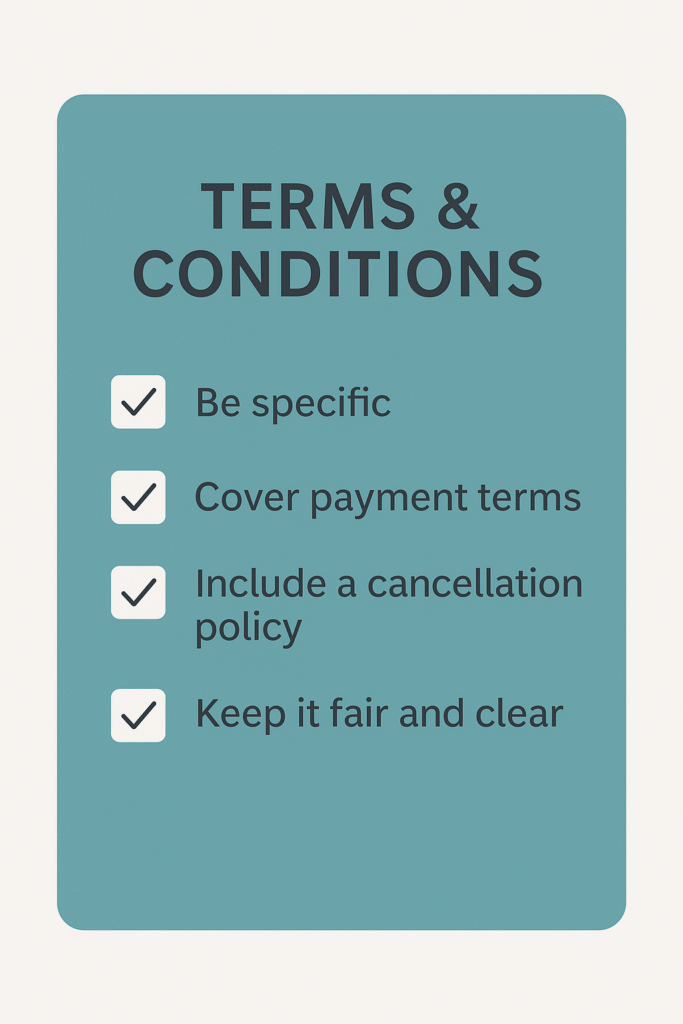
Having clear terms makes parents feel safe, confident, and ready to book — because they know exactly what to expect.
Mistake 7: Not Tracking Leads
Most teachers are way closer to getting students than they realize — but they lose opportunities simply because they don’t track who’s engaging with them.
Here’s what usually happens:
- Someone likes a post → forgotten.
- Someone comments something interested → forgotten.
- Someone viewed a story → forgotten.
- Someone messaged months ago → forgotten.
Not tracking leads means you forget:
- Who’s warmed up
- Who asked a question
- Who showed interest
- Who you should follow up with
- Who might book a trial with a simple nudge
Teachers assume, “If they’re interested, they’ll message me.”
But parents are busy. They forget. They get distracted. They see your content and think, “I should message this teacher,” and then… life happens.
A lead tracker fixes all of this.
When you track leads, you suddenly see:
- Who’s consistently watching your stories
- Who always likes your posts
- Who commented on your offer
- Who interacted months ago
- Who might be ready for a trial NOW
Tracking leads doesn’t make you salesy — it makes you organized and professional.
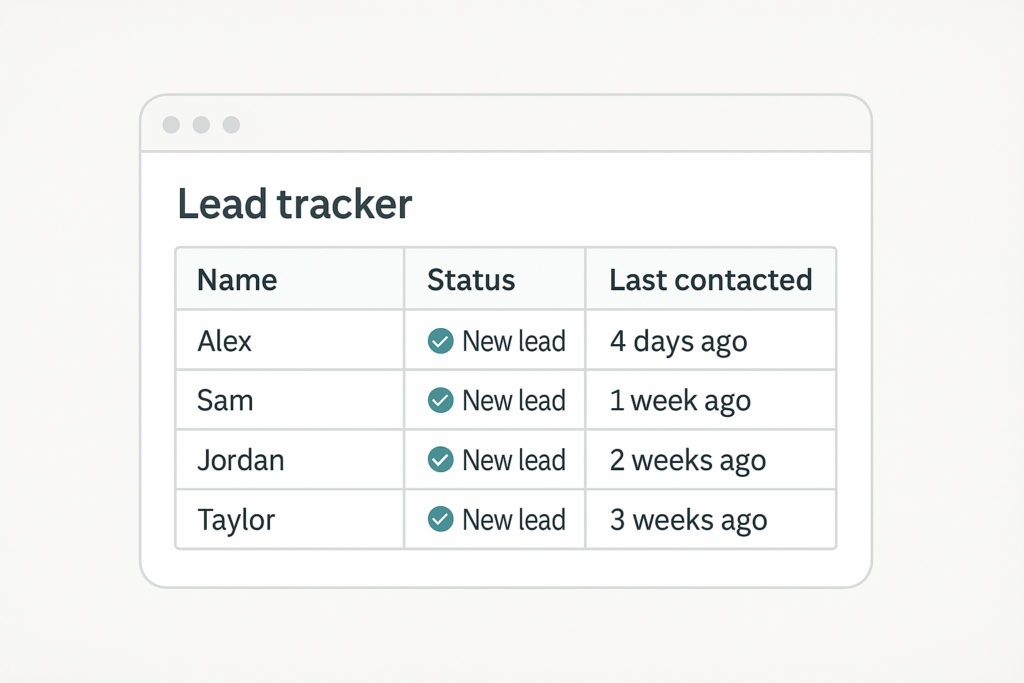
When you follow up gently and naturally, parents feel supported — not pressured.
Conclusion
Getting students isn’t about luck — it’s about having a clear system. When you avoid these seven mistakes, everything becomes easier. Your content gets clearer. Parents understand what you offer. Your confidence grows. And booking students finally starts to feel predictable instead of stressful.
Here’s a quick recap:
- Know your niche
- Choose confident pricing
- Follow a simple content plan
- Optimize your profile
- Do consistent outreach
- Have clear terms & conditions
- Track your leads
If you want help putting all of this into place step‑by‑step, the 21‑Day Teacher Start‑Up Challenge walks you through all of these steps and more, so you can finally set your business up for long‑term success with clarity and confidence.
The first 7 days are free, so you can try it with zero pressure and see if it’s right for you.
Leave a Reply