
December can feel like a teaching minefield: families are busy, not every student celebrates the same holidays, and there is no time to rebuild your curriculum. Yet this month also offers a huge opportunity to boost engagement, show real progress, and grow your studio. With a little planning and a few seasonal “wrappers,” you can keep language goals on track while making lessons feel fresh, inclusive, and shareable.
Why December Matters (and How to Use It)
Think of December as two things at once: a busy time and a strategic one. Parents are looking for special experiences for their kids, and end-of-year momentum can generate referrals and bookings for January. That means a short, themed lesson or a one-off party can be both meaningful for students and useful for your business.
- Income and recruitment: Free or low-cost holiday classes can grow your email list and provide an easy entry point for new families.
- Retention and proof of progress: Celebratory materials—certificates, highlight videos, and short progress reports—help parents see value and keep paying for lessons.
- Culture and inclusion: Use seasonal topics to introduce different cultural traditions while staying sensitive to beliefs and preferences.
Keep Language Goals First
Holiday themes should be a wrapper, not a replacement, for learning objectives. Keep the grammar, vocabulary, or speaking targets you normally teach. Then add seasonal visuals, warm-up questions, and a short themed activity to make the lesson feel new.
Practical tip: Choose one language target per class (for example, past tense narration or vocabulary for toys) and design the holiday elements around that target so learning remains measurable.
Low-Prep “Holiday Wrappers” That Work
You don’t need to invent new lessons. Changing the wrapper around your existing content keeps prep time low and energy high. A few simple ideas:
- Switch your virtual background and costume piece (hat, elf ears, silly avatar).
- Add a seasonal warm-up question: “What are you thankful for today?” or “What toy would you like for the holidays?”
- Use themed rewards and stickers to keep motivation up.
- Create a one-off collaborative story, then export it as a shareable book or video.
One-Off Classes, Camps, and Freebies
December is perfect for experimenting with formats. Consider:
- Free live holiday classes to build your mailing list and get parents to try your teaching style.
- Short paid camps (three to five lessons) around a topic like “Holiday Traditions” or “Winter Science.”
- Private one-off lessons for families who want something special without changing their regular schedule.
Make Takeaways Shareable
Design activities with shareability in mind. Parents love to post milestones—use that. Examples of sharable takeaways:
- Certificates that say what a student can do now (for example, “I can tell a short story in four sentences”).
- 30-60 second progress reels compiled from class clips; keep them short and focused.
- Picture books, collaborative stories, or AI-generated images that students helped create.
Showcase Progress: Practical Ideas
Parents want concrete evidence of improvement. Use these easy-to-produce formats:
- Certificate Summaries: Put the student’s top three achievements on a small image with your contact info. Parents share these proudly.
- Progress Videos: 30-second compilations that show a student’s speaking development across a few months.
- Short Reports: One-paragraph notes with specific learning targets achieved and suggested next steps.
Quick calculation idea: If you need a vocabulary estimate, multiply the number of lessons by three for younger learners and by four for higher-level students to get a rough count of new words learned.
Storytelling That Builds Confidence
Stories are perfect for December. They practice past tense, sequencing, descriptive language, and imagination—and they are fun.
- Collaborative stories: Each student adds one sentence to a shared story. Capture the result as a book or audio file.
- AI images in real time: Ask students what happens next, generate an image, then use it as a prompt for speaking or writing.
- Elf or mascot stories: Use a recurring character (an elf, a reindeer, a visiting kangaroo) to create short episodic tales.
End-of-Year Party Format (Fast & Effective)
Host a 25–50 minute end-of-year party that mixes celebration and learning.
- 5 minutes: Warm-up game or song
- 10–15 minutes: Fun speaking challenges and storytelling
- 5–10 minutes: Certificates and applause
- Optional: A short craft or shareable photo to send home
Give certificates on-screen during the party, then email image files so families can post and share. This drives referrals when friends see the celebration.
Gratitude and Reflection Activities
Reflection is an easy, culture-friendly topic any teacher can use. Prompts like “This year I learned…” or “I am thankful for…” work across ages.
- Make a “thankful tree” or a shared digital poster with one sentence from each student.
- Use reflection as the basis for short writing tasks or speaking showcases.
- Turn reflections into a progress video or a certificate highlight.
Festive Rewards and Engagement Tools
Small reward systems keep momentum going. Seasonal rewards—animated stickers, holiday sounds, or themed medals—are quick wins that make lessons feel special without extra prep.
Using Rewards Effectively
- Adjust frequency by student. Some need constant reinforcement; others do not.
- Match rewards to cultural sensitivity. Offer neutral options like stars or sport-themed icons for students who do not celebrate certain holidays.
- Plan your rewards so they can be cleared between students when teaching back-to-back classes.
Seasonal Lesson Examples and How to Use Them
Here is a short walkthrough of lesson types that work well in December and how to adapt them for different levels and settings.
1. Gratitude/Thankful Tree
Focus: reflection, writing starters, speaking prompts. Use picture prompts and sentence stems to speed the writing process for shorter lessons. Great for mixed-age groups.
2. What Do You Want for the Holidays?
Focus: vocabulary and question-and-answer practice. Use find-the-differences and magnifying-glass search activities to add interaction and encourage full-sentence responses.
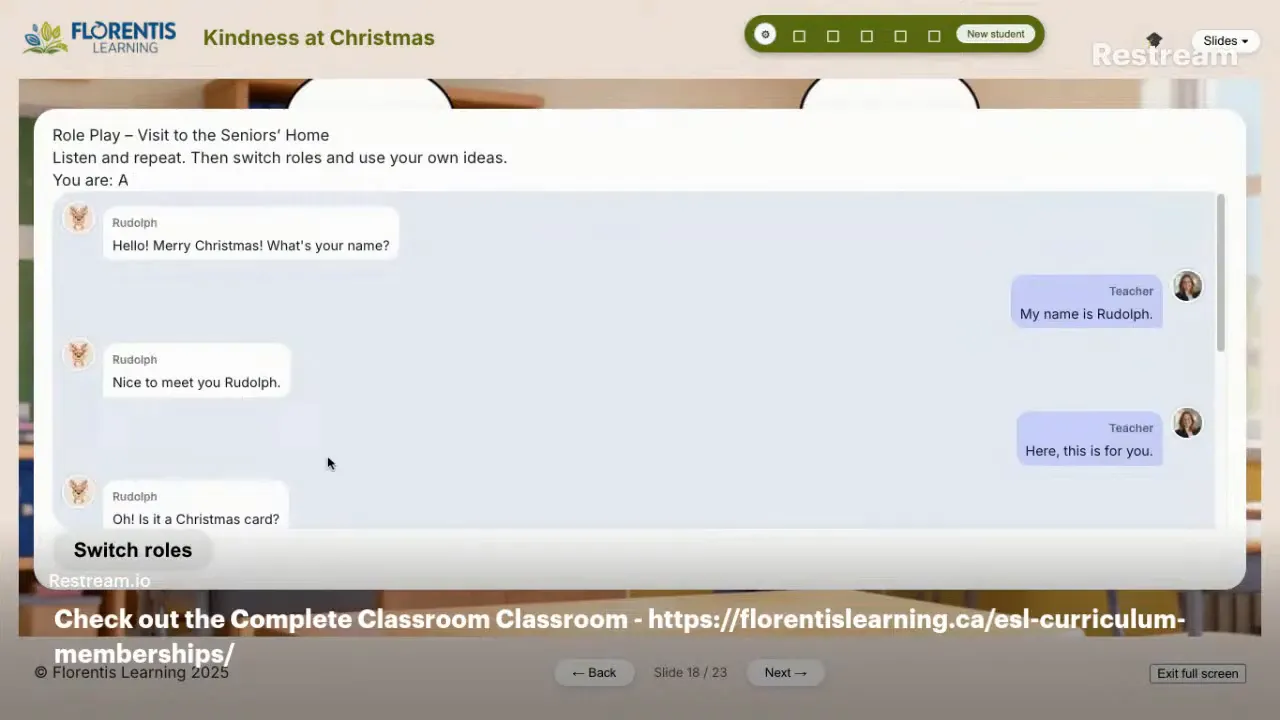
3. Christmas Kindness
Focus: vocabulary around giving and kindness, reading/listening comprehension, and a real-world speaking task (planning a visit or small act of kindness).
4. Celebrations Around the World
Focus: cultural awareness, reading for detail, and comparative speaking. Pick one country per lesson and explore its traditions over a few classes. Works extremely well as a live group class or short series suitable for older students.
Permissions and Sharing: Best Practices
- Get explicit permission to reshare class clips and images. A simple opt-in in your onboarding email is enough.
- When in doubt, create materials that are intended for private family sharing and ask parents if they want you to post them publicly.
- Encourage parents to post with a short suggestion or hashtag and capture those testimonials for your marketing portfolio.
Quick December Checklist for Busy Teachers
- Pick one language target per themed lesson.
- Create one shareable takeaway per class (certificate, short video, or book).
- Decide which classes will be holiday-themed and which will stay neutral.
- Schedule one or two one-off events to attract new students.
- Collect permissions for sharing and identify likely sharers among your parent base.
Thinking in terms of wrappers rather than whole new lessons saves time and preserves progress. A change of background, a festive reward, and a short collaborative story can make an ordinary lesson feel magical for students and rewarding for parents.
Resources and Next Steps
For ready-made seasonal lesson sets, progress templates, and teacher management tools, explore florentislearning.ca. If you plan to run a December event, keep it short, focused on one language goal, and designed to create a shareable moment for families.
“Change the wrapping, not the toy.” Small seasonal touches keep lessons fresh without extra curriculum work.
Next:


Leave a Reply