

When it comes to booking more students, you don’t need flashy credentials or a celebrity endorsement. You need trust. And one of the fastest ways to build that trust is with testimonials—even if you’re brand new.
In this post, I’ll show you how to gather and use powerful testimonials strategically to grow your teaching business, even if you’re still in your early days.
Why Testimonials Work So Well
Think about the last time you bought something online. Did you check the reviews?
Testimonials are like reviews—but better. They don’t just rate your service; they tell a story about someone else’s experience. And that story makes people think, “That could be me.”
Here’s why they work:
- They build instant credibility. When someone sees that another parent has trusted you, they’re far more likely to consider doing the same.
- They reduce risk. A good testimonial answers the quiet worry in every parent’s head: “Is this the right teacher for my child?”
- They humanize your business. Parents don’t just want a teacher—they want someone who gets their child. Real feedback from other families shows you’re relatable, trustworthy, and effective.
- They provide social proof. When families see others talking about your classes positively, it creates a bandwagon effect: “If it worked for them, it might work for us too.”
In a world full of options, testimonials signal credibility, reliability, and relatability—especially in education, where parents want to feel confident in the teacher they choose.
Where to Get Testimonials If You’re Just Starting
If you’re new to teaching independently, you may also enjoy this post: 10 Things I Wish I Knew When I Started Teaching Online
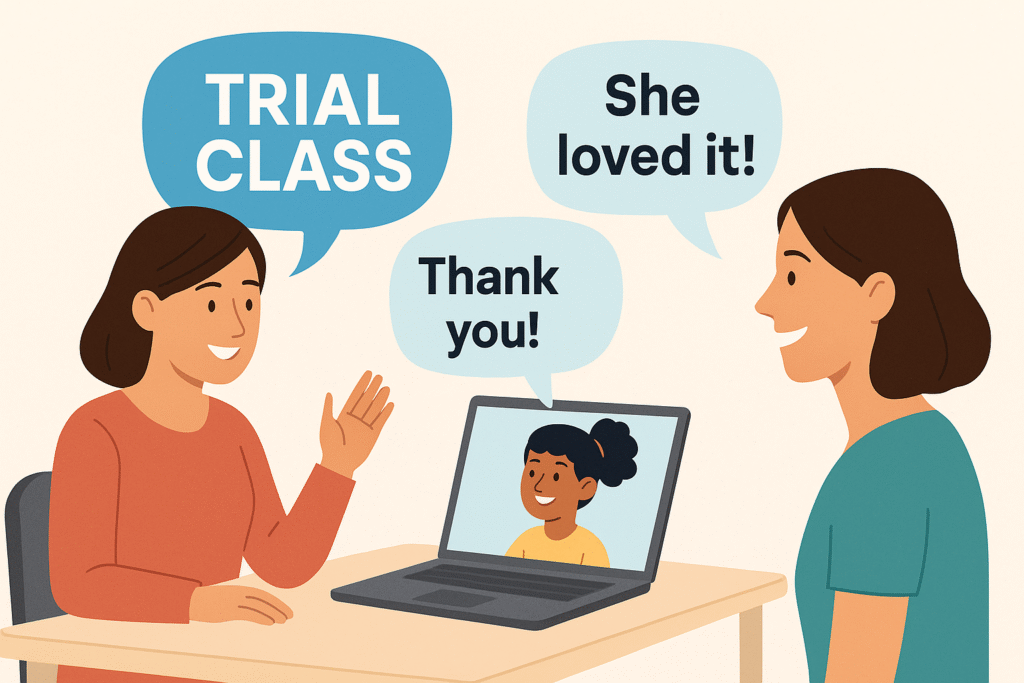
So you’re just getting started and don’t have a roster of paying clients yet—don’t worry. There are still plenty of ways to collect real, meaningful testimonials. Here’s how:
- Offer Free or Discounted Trial Lessons: Invite a few children to take a free class in exchange for parent feedback. Be transparent about why—parents are usually happy to help.
- Teach Friends’ or Family Members’ Children: These “practice” students are a goldmine for testimonials. Treat it like a real lesson and request honest feedback.
- Did you use to work at another company—like VIPKid, Palfish, or Cambly? Those reviews and feedback messages from parents, students, or even internal teacher evaluations are great starting points. Just pull out the highlights and adapt the language to reflect your current offer.
- Peer or Mentor Observations: Ask a colleague or mentor to sit in and share what they noticed about your teaching strengths. It’s a great way to gain outside perspective and social proof.
- Classroom Demos or Pop-Ups: Host a live event or free workshop. Ask attendees to give you a one-liner at the end about what they enjoyed or learned.
The key is this: you don’t need a long teaching history to have an impact. You just need a few voices saying, “This teacher is someone I trust.”
What Makes a “Good” Testimonial
Not all testimonials are created equal. A strong testimonial doesn’t just say “She’s a great teacher”—it shows why you’re the right teacher for someone else’s child.
Here’s what to look for when choosing or requesting testimonials:
- Highlight a transformation: The best testimonials show a “before and after.” For example: “My daughter used to hate writing—now she begs for class!” That change speaks louder than general praise.
- Be specific: Concrete details create credibility. “We’ve seen major improvement” is nice, but “He helped my son go from reading Level B to Level D in two months” is unforgettable.
- Feel authentic: Let testimonials sound like real parents. Avoid over-editing or sounding like a polished ad. Natural language builds trust.
- Include identifying info (if permitted): Names, ages, or even general identifiers like “Parent of 6-year-old boy in China” give the testimonial weight. Anonymous reviews feel less trustworthy.
- Speak to results or experience: Whether it’s academic growth, increased confidence, or simply a child loving class again—highlight the result that matters to your ideal client.
📌 Pro Tip: Add a photo (with permission). A smiling child or a screenshot of a real message is 10x more powerful than plain text.
If you’re just starting, one really strong, specific, and honest testimonial can carry your whole marketing strategy. You don’t need 20—you just need 1–3 that hit the points above.
How to Use Testimonials to Convert Browsers into Bookings
Want to use your testimonials to help grow your online presence? Read this: Building a Facebook Community for Your Niche
Now that you’ve collected a few strong testimonials, it’s time to make sure they’re actually seen—and doing their job.
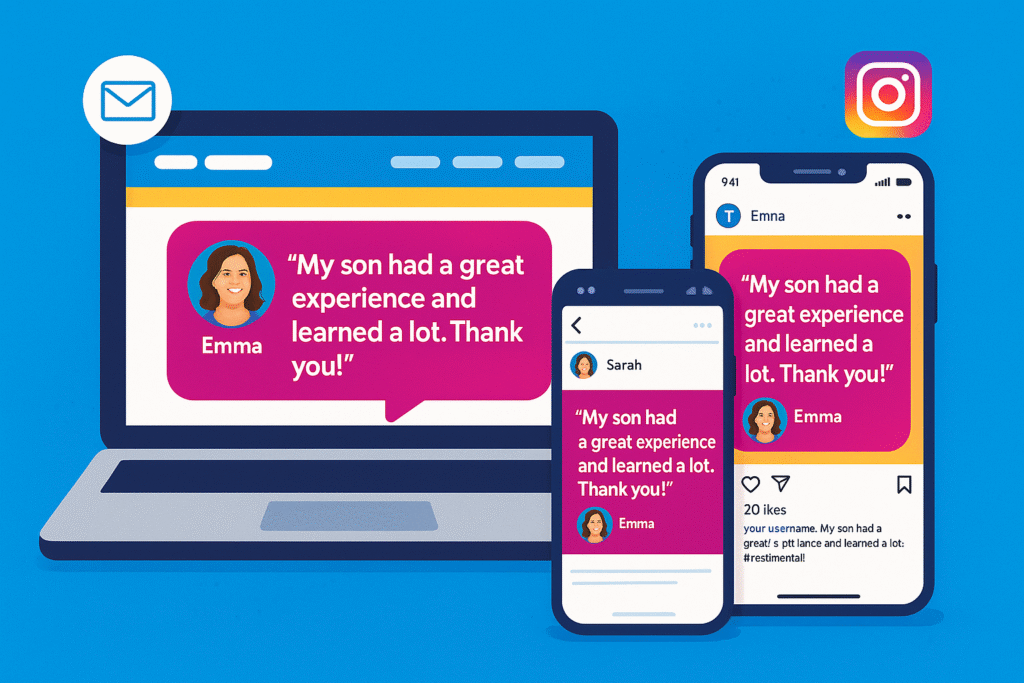
Here’s how to put your testimonials to work:
- On your website: Add testimonials in multiple places, not just a dedicated page. Feature a rotating quote on your homepage, include a testimonial on your class booking page, and sprinkle student wins on your “About” page to build trust. You can also use a tool like Senja to collect, manage, and display testimonials beautifully with no coding required.
- In your emails: Whether you’re nurturing a lead or announcing a class, include a parent quote that reinforces the value of your teaching. These little blurbs can dramatically increase click-through and conversion rates.
- In your social media: Screenshot a message from a happy parent or create a graphic with a short quote. These posts can act as soft calls to action and build momentum.
- During video or live content: Mention a student success story casually in your teaching videos, livestreams, or webinars. It feels natural and lets viewers imagine similar results for their own child.
- In your lead magnets and onboarding: If someone grabs your freebie or signs up for your email list, introduce your teaching with a few warm, well-placed testimonials. Let them hear from real families before they even speak to you.
- As captions or case studies: Turn a testimonial into a short story post. “Meet Sam, a shy 6-year-old who wouldn’t speak in class. After 3 sessions…”—and wrap it with a quote from the parent. It’s subtle marketing gold.
Think of testimonials as proof, not decoration. They should be working for you everywhere your audience is making a decision—whether to follow you, book a trial, or enroll in your course.
What to Say When Asking for a Testimonial
Asking for a testimonial doesn’t have to feel weird or pushy. If you’ve provided value, most parents are happy to share a few words—you just have to make it easy for them.
Here’s a friendly script you can copy and paste:
“Hi [Parent Name],
I’m collecting feedback to help other parents understand what it’s like to work with me.
If you’re comfortable, could you share a few sentences about your child’s experience so far? A quick quote or comment would mean a lot!”
Want to make it even easier? Provide a few guiding questions to help them think about what to say. These work well:
- What made you decide to try this class?
- What was your child struggling with before they started?
- What changes have you noticed in your child since beginning lessons?
- What part of the class does your child love the most?
- Would you recommend this class to another parent—and why?
You can also offer to draft something based on their informal message and get their approval. For example, if a parent texts, “He’s finally excited to read again!” you might reply:
“That’s so wonderful to hear! Would it be okay if I shared that as a short testimonial—something like: ‘After struggling with reading, my son is finally excited to read again thanks to these classes!’ I can leave out names or include just your first name if you prefer.”
Always ask for permission, and thank them genuinely. Then save and organize your testimonials so they’re ready when you need them.
Final Tips: Keep It Simple, Honest, and Visible
Need help managing your time so you can fit in marketing tasks like testimonials? This post can help: Balancing Teaching and Business: Time Management Tips
Don’t overcomplicate it. The power of testimonials lies in how real they are—not how fancy they look.
Here are some parting tips to make the most of them:
- Ask often: Make asking for feedback a habit, not a one-time task. The more you normalize it, the easier it gets.
- Even short testimonials work: A one-line win (“She finally enjoys reading!”) is better than waiting months for a perfectly polished paragraph.
- Put them where people make decisions: Don’t hide them on a testimonial tab. Put them on your homepage, class booking page, emails, and even inside your lead magnet PDFs.
- Rotate and refresh: Keep your testimonials current. Rotate in new ones and remove any that feel outdated or vague.
- Include visuals when possible: A smiling child, a parent quote screenshot, or a clip from a live class can dramatically increase believability.
- Be honest and never fake it: Resist the temptation to embellish. A real, imperfect review will always outperform a fake one that feels too good to be true.
Most importantly: stay consistent. Gathering and using testimonials should be a regular part of your business—not just a box to check. As your student base grows, your library of trust-builders will grow with it—and that’s what will keep your calendar full.
What’s Next?
If you’re ready to set up your own student-attracting system, we cover this in the Enroll and Grow Challenge inside Teacher Boss Society. It walks you through how to confidently set up your teaching business and start enrolling students—with testimonial-building baked right in.
👉 Join Teacher Boss Society and start growing today.
Leave a Reply