
When it comes to building a stable income as an online teacher, recurring revenue is the dream. You do the work once—and keep getting paid month after month. But not all recurring models are created equal. Should you launch a membership, sell an evergreen course, or offer a monthly subscription?
Let’s break down the differences, pros and cons, and which one might be right for you.
What is Recurring Revenue?
Recurring revenue is income that comes in on a regular, predictable basis—usually monthly. It’s the opposite of the one-and-done sale. Instead of chasing new buyers constantly, you focus on retaining the ones you already have.
This model gives you breathing room. Rather than hustling for every student or every sale, you can build a foundation of reliable income that grows over time. Whether it’s monthly lesson access, ongoing support, or curriculum delivery, the key is consistency.
For online teachers, this can look like:
- Parents paying monthly for access to a series of ongoing classes
- A weekly writing club where students subscribe to participate
- A digital library of resources that renews automatically
When set up well, recurring revenue creates freedom—freedom to plan, to scale, and to teach the way you want.
This is perfect for online teachers who want to scale their business without working 10x harder.
Model 1: Membership
Think: community + content + consistency.
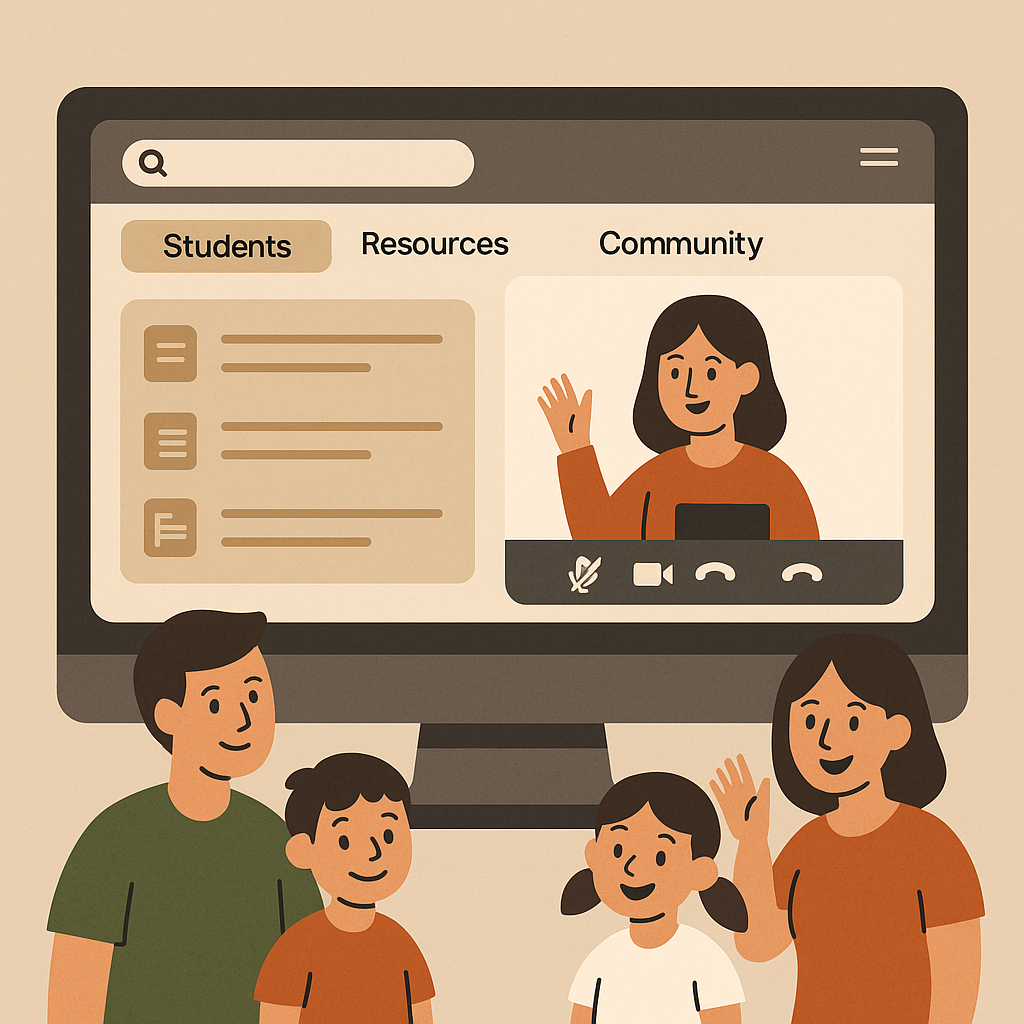
A membership is when your audience pays monthly (or annually) to access a collection of ongoing value—whether that’s lesson materials, classroom resources, live support, or themed monthly workshops.
Example: A teaching membership where parents subscribe for access to weekly English classes, printable worksheets, and storytime replays—perfect for building a consistent routine for their child.
Pros:
- Builds community and loyalty
- Ongoing engagement = less churn
- Easy to launch once you have an audience
Cons:
- You need to show up regularly
- Member churn is a constant challenge
- Can feel like a lot to maintain if you don’t batch your content
Model 2: Evergreen Course with Payment Plan
Courses are usually “one-and-done” purchases—but if you offer a payment plan (like $99/month for 3 months), you can temporarily create recurring income.
Example: A 6-week program that walks teachers through setting up their first online class, priced with a 3-month payment option.
Pros:
- Automated income from each launch
- No need to update constantly
- Good for higher-ticket items
Cons:
- Payments stop after the course is paid off
- Not true monthly recurring unless you launch repeatedly
- Requires solid sales systems to keep traffic flowing
Model 3: Subscription
This one’s usually low-ticket and tied to content delivery—like monthly lesson plans, student activities, or a writing club for kids.
Example: A $9.99/month subscription where parents get weekly English lessons for their child.
Pros:
- Scalable and simple
- Can grow quickly with the right audience
- Doesn’t require your live presence
Cons:
- Lower price point = need more subscribers
- Cancellations can pile up if value isn’t clear
- Needs constant marketing or bundling to retain people
Model 4: Scheduled Live Class Subscription
This model combines the predictability of a subscription with the engagement of live teaching. Students (or their parents) pay monthly to reserve a recurring spot in a live class—whether 1:1 or in a group—held at a set time each week.
Example: A student enrolls in a weekly writing class that meets every Thursday at noon. Their parent pays $79/month for ongoing access to that live session.
Pros:
- Builds strong teacher-student relationships
- Predictable schedule = easier planning
- Higher retention when students build a routine
Cons:
- Less scalable than passive models
- Limited capacity (unless using group format)
- You still trade time for money
6. Which One is Best for You?
Here’s a quick cheat sheet:
| You are… | Best Option |
|---|---|
| Newly independent and want steady income with structure | Scheduled Live Class Subscription |
| Just starting out and want a focused offer | Course |
| Teaching young kids or providing printable content | Subscription |
| A teacher with an engaged audience | Membership |
| Wanting a mix of value, community, and recurring payments | Membership + Subscription Bundle |
How to Get Started
Here’s what I recommend:
- ✅ Start with one model. You can always layer later.
- ✅ Use content you already have—don’t reinvent the wheel.
- ✅ Build your email list and warm up your audience.
- ✅ Join Teacher Boss Society to access past trainings like our High-Converting Freebie Challenge, Enroll and Grow Challenge, and Email Sequence Challenge.
You don’t need a fancy funnel—you need a clear offer and a way to deliver it.
What’s Next?
If you’re ready to move from “sporadic sales” to “steady income,” it’s time to pick your recurring model and build it out.
And if you’re not sure how to structure your offer, your emails, or your launch plan? That’s exactly what we walk through inside Teacher Boss Society. You’ll get support, strategy, and systems to make it happen—without the stress.
Leave a Reply