
Introduction
You’re already teaching online… so why do so many teachers say, “You need a course”?
Teaching live is rewarding and personal, but it can also limit your time and income. Creating a course can bring more flexibility, reach, and even passive income—but it’s not always the right step for everyone right now. In this post, we’ll break down how to know if you’re ready, explore different course types (evergreen, live, hybrid, and mini), and help you decide what fits your teaching business best.
What Does It Mean to “Create a Course”?
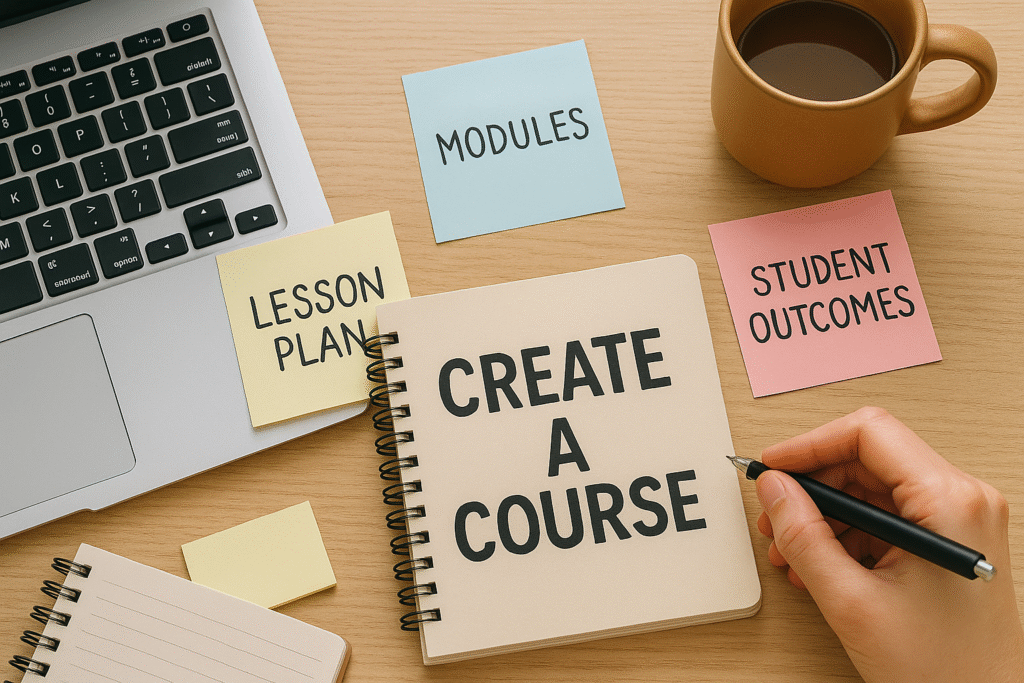
Creating a course doesn’t mean reinventing the wheel. It simply means packaging your teaching into a structured, repeatable system that students can go through at their own pace.
Think of it as turning your expertise into a roadmap your students can follow without needing you in real time. Instead of repeating the same lesson over and over, your course does the teaching for you—freeing up your time to focus on higher-level work, new students, or personal time.
Creating a course can look different for every teacher:
- A full signature course that takes students through your entire method.
- A short mini-course designed to solve one small, specific problem.
- A live workshop series that gets recorded and reused later.
The magic of course creation is that it allows you to scale your teaching without losing your personal touch. You can teach once and impact hundreds of students afterward.
It’s about leveraging what you already teach and turning it into something that continues to work for you—long after the live class ends.
If you’ve ever said, “I wish I could clone myself,” that’s exactly what a course does.
Why Teachers Are Turning Courses Into Income Streams
Online teachers are no longer limited to one-on-one lessons or small groups. By creating a course, you can turn your expertise into a long-term asset that grows your income while expanding your reach.
Here’s why more teachers are doing it:
- Scalability: With a course, you can teach once and help many students. Whether 10 or 100 people enroll, your workload doesn’t increase.
- Diversified income: Instead of relying solely on live lesson hours, courses create additional streams of revenue. Some teachers even replace half their teaching schedule with course income.
- Freedom and flexibility: You can plan vacations, adjust your workload, or explore new projects while your course continues to bring in sales.
- Impact beyond time zones: Evergreen courses allow you to teach globally, reaching students who might never fit your live schedule.
- Credibility and growth: Courses showcase your expertise and can help you attract more 1:1 students or collaborations.
Real-world example: One teacher might run a live pronunciation course once per term and then convert the recordings into an evergreen version. Another might create a writing course that’s always available, earning income even during holidays.
Ultimately, courses create time leverage—allowing you to serve more students, earn more income, and step into the role of educator and business owner.
If you feel like you’re maxed out on live lessons, a course might be the next natural step.
Signs You’re Ready to Create a Course
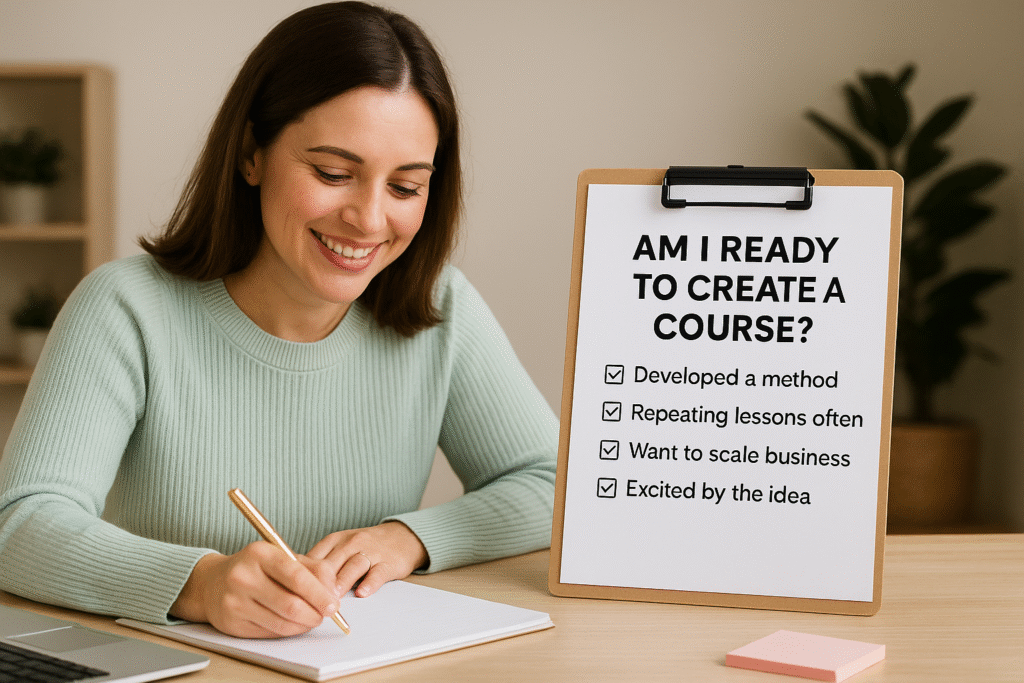
You might be ready if:
- You’ve developed a proven method or system that gets results.
- You find yourself teaching the same concepts repeatedly.
- You’re eager to scale without adding more hours.
- You feel excited about helping more students in less time.
- You’re comfortable using simple tech tools or willing to learn.
- You already know who your ideal student is and what they struggle with.
If these sound familiar, it’s probably time to start building your first course. You don’t need everything figured out—you just need a repeatable process that works.
Here’s a quick mindset shift: You’re not creating something new; you’re organizing what you already do successfully into a format that more students can access.
Imagine this: the lessons you’ve perfected over dozens of classes could now reach 100 new students while you sleep. That’s the moment many online teachers realize, “I’m ready.”
A course is often the next phase of growth once your 1:1 or small-group teaching feels steady.
Signs You Might Want to Wait
There’s no rush to create a course. You might want to hold off if:
- You’re still defining your niche or ideal student.
- You don’t have consistent lesson results yet.
- You feel overwhelmed by your current schedule.
- You want to refine your systems before scaling.
- You’re unsure what transformation your course will deliver.
- You’re struggling with tech or marketing burnout.
If you relate to these, that’s perfectly okay. Every successful course creator once stood exactly where you are—wanting to grow, but needing a bit more clarity first.
This is your foundation phase—the time to fine-tune your teaching, gather feedback, and test ideas. Many teachers use this stage to identify patterns: What are students asking for repeatedly? What challenges do you help them overcome most? These clues will shape your future course.
And remember: waiting doesn’t mean doing nothing. You can start collecting testimonials, refining your curriculum, and documenting your methods now. When you’re ready to launch, all that groundwork will make the process smoother.
If you’re still working on your niche or figuring out who your ideal students are, this is the perfect time to get support. Join Teacher Boss Society and participate in the Enroll and Grow Challenge to finalize your business setup, clarify your niche, and start enrolling students confidently.
It’s better to wait and build a strong foundation than to rush into creating something you’ll need to redo later.
The Different Types of Courses
When it comes to course creation, one size definitely doesn’t fit all. The best type of course depends on your goals, your teaching style, and how hands-on you want to be with your students. Here’s a breakdown of the most common formats and how each one can fit into your teaching business:
Evergreen Course
An evergreen course is fully pre-recorded and available for purchase year-round. Once it’s created, students can enroll anytime and learn at their own pace.
Why it works: Evergreen courses are ideal for passive income and reaching global students across time zones.
Best for: Teachers who want to step away from live teaching but still impact students daily.
Tip: Use automated funnels or email sequences to consistently bring in new enrollments.
Live Course
A live course happens in real time—usually through platforms like Zoom or Koala Go. You set a start date, meet weekly, and teach interactively.
Why it works: Students love accountability and live access to you.
Best for: Testing a new course topic before making it evergreen.
Tip: Record your live sessions so you can repurpose them into a self-paced course later.
Hybrid Course
A hybrid course combines pre-recorded modules with live elements (like coaching calls, workshops, or Q&A sessions).
Why it works: You get the freedom of automation plus the connection of live support.
Best for: Teachers who enjoy interacting but don’t want to teach everything live every time.
Tip: Add a private community or group chat to keep students engaged between sessions.
Mini Course
A mini course is a smaller version of your full offer—focused, fast, and easy to complete.
Why it works: Mini courses are low-risk for buyers and great for validating your idea.
Best for: Teachers new to course creation or testing new niches.
Tip: Use mini courses as entry points into your higher-ticket offers or memberships.
Cohort-Based Course
Students go through the course together, following a set timeline. This creates momentum and a community feel.
Why it works: Shared progress builds motivation and accountability.
Best for: Teachers who love group energy and interaction.
Tip: Pair this model with live calls or group projects for deeper engagement.
💡 Pro Tip: Inside Teacher Boss Society, we help you choose the right course model for your goals so you can build something sustainable from the start. Whether you want a passive evergreen system or a high-touch group experience, you’ll find the roadmap to make it happen.
Choosing the Right Format for You
Choosing your course format isn’t just about preference—it’s about matching your goals, energy, and audience needs. Each type of course serves a different purpose, and the right one depends on what stage you’re in as a teacher and business owner.
Here’s a guide to help you think through it:
If you love live interaction and feedback:
Choose a Live or Cohort Course. You’ll thrive on student energy, real-time discussions, and seeing immediate results. This model is perfect if you enjoy being hands-on and building strong community connections.
If you want more flexibility and freedom:
Go with an Evergreen or Hybrid Course. You’ll set it up once, automate most of the delivery, and create income that continues even when you’re not actively teaching. Ideal for teachers balancing multiple projects or family life.
If you’re testing your first course idea:
Start with a Mini Course. It’s low-pressure, easy to create, and helps you validate your topic and process before investing in a full-scale course. Many teachers turn their mini course into a larger program later.
If you’re scaling an established business:
Consider creating a signature course—your main, transformational offer that defines your brand. This could become your flagship program inside your ecosystem, supported by smaller products and memberships.
💬 Pro Tip: Think of your course as part of your student journey. For example, your mini course could lead to your live program, which eventually feeds into an evergreen signature course. Each piece works together to serve students at different stages.
Inside Teacher Boss Society, we help you map this out step-by-step so you know exactly what to create first—and how to build a course lineup that grows with your business.
Simple Steps to Get Started
Launching your first course doesn’t have to feel overwhelming. You can start small, build momentum, and learn as you go. Here’s a practical step-by-step path that works for online teachers:
- Pick one specific problem your course will solve.
Don’t try to cover everything you teach. Focus on one clear transformation. Example: instead of “Improve your English,” try “Help your child write a paragraph confidently in English.” - Outline 3–5 lessons that lead students to the solution.
Keep it simple. Each lesson should move them one step closer to the goal. Write short scripts or bullet points before recording. - Choose your format.
Decide if this course will be live, evergreen, or hybrid based on your current schedule and audience preferences. - Record or outline your content—done is better than perfect.
Use what you already have! You can repurpose lesson recordings, slides, or workshop replays to start. - Set up your delivery platform.
Some great beginner-friendly options include:- Live: Zoom, Koala Go, or Google Classroom
- Evergreen: Thinkific, Kajabi, Email, your own website, or Podia (these are just few options!)
- Hybrid: Facebook, Skool or Circle (for community + pre-recorded lessons)
- Launch to your current audience first.
Share it with your email list or regular students. Offer early-bird pricing or bonuses to gather testimonials. - Collect feedback and improve.
Treat your first version as a test run. Every student comment helps you refine it into your signature course.
💡 Pro Tip: Inside Teacher Boss Society, we help you plan, price, and launch your course step-by-step—with templates, strategy calls, and a community cheering you on.
Small launches are powerful. You learn fast, build confidence, and create a product that continues to grow with your business.
Final Thoughts
You don’t need a massive audience or fancy studio setup to create a course. If you have something that helps your students get results, you already have what it takes.
Creating a course isn’t just about income—it’s about impact. It’s about giving your students another way to learn from you, freeing your schedule so you can focus on what you love, and building a business that lasts beyond the daily lesson grind.
Every teacher has a process that works—something that consistently helps students grow. That’s exactly what your course should be built around. Your students want the shortcut you’ve already figured out.
If you’re feeling nervous, remember: every successful teacher you admire once launched their first imperfect course. You’ll learn as you go, improve each round, and gain confidence with every student who enrolls.
✨ Encouragement: Don’t wait for the “perfect time.” There isn’t one. The best time to start building your course is when you realize you want more freedom and more impact—and that time might just be now.
Ready to take the next step? Inside Teacher Boss Society, you’ll get the support, structure, and community to bring your first (or next) course to life—with confidence.
9. What’s Next?
If you’ve been dreaming about creating a course but aren’t sure where to start, this is your moment to take action. You already have the experience, lessons, and ideas—now it’s about putting them into a structure that grows your impact and income.
Here’s what to do next:
- Decide your goal. Do you want more freedom, more income, or a new way to serve your students? That goal will shape your course format.
- Join Teacher Boss Society. Inside, you’ll get hands-on coaching, resources, and templates to plan, price, and launch your course. The community walks you through everything—from choosing your topic to marketing your first launch.
- Start small and take messy action. Your first course doesn’t have to be perfect—it just has to be finished. Once it’s live, you can always improve and expand.
You’ve already built the foundation through your teaching. Now it’s time to let your expertise work for you.
Ready to go from online teacher to course creator? 💪
Join Teacher Boss Society today and start building your course with clarity, confidence, and community support.
Leave a Reply