

If you’re an online teacher, there’s a good chance you have a to-do list somewhere. Maybe it’s in a notebook, an app, or on a collection of sticky notes. And if you’re running your own teaching business, that list probably keeps getting longer.
Between teaching classes, preparing lessons, responding to students, marketing your services, and developing new products, there’s always something else to do. You might even have a big goal written on your list: “Create an online course.”
But weeks pass and the task is still sitting there. The problem may not be your motivation. It may be that your to-do list isn’t telling you what to do next.
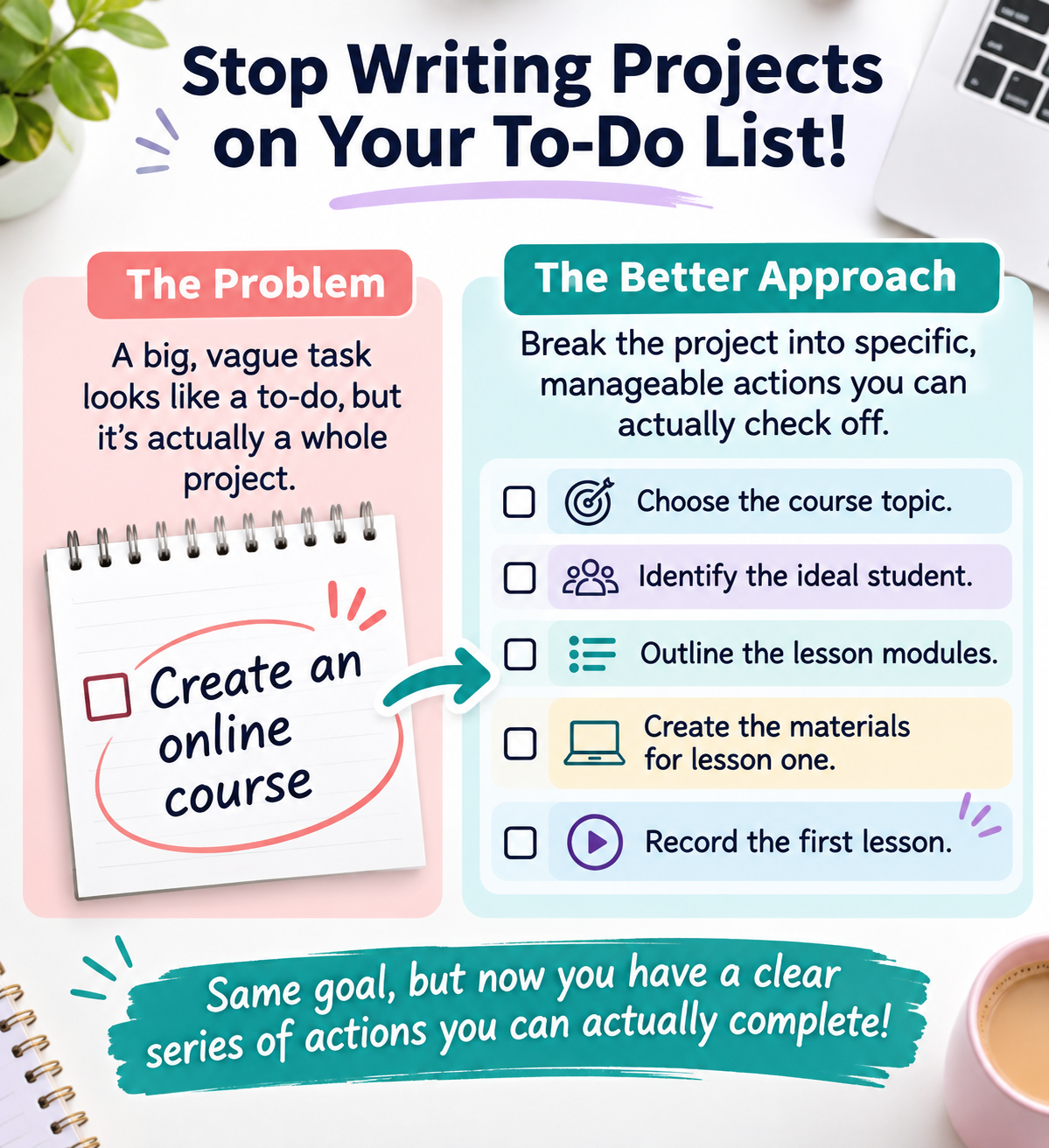
1. Your To-Do List Is Full of Projects, Not Tasks
Think about the items online teachers often write down: create an online course, build a website, find more students, start a YouTube channel, develop a curriculum. Those are projects, not individual tasks. Each one can involve dozens of steps.
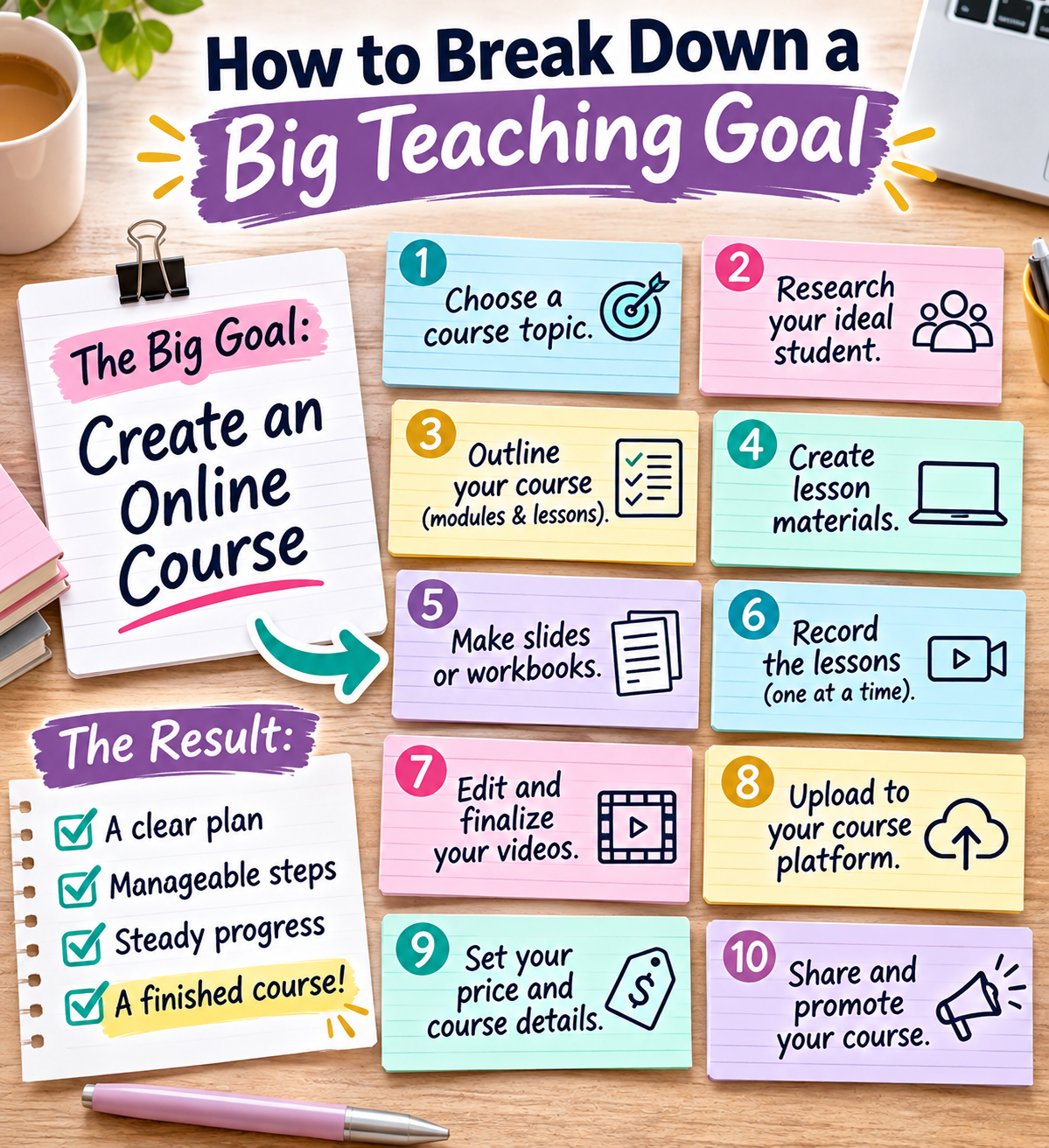
Take “create an online course.” That means choosing a subject, identifying your audience, outlining modules, creating materials, recording lessons, choosing a platform, and promoting the course. If you’re deciding whether to take this route in the first place, read Should You Create a Course as an Online Teacher?.
A vague project title isn’t an actionable instruction. A useful task should tell you exactly what to do when you sit down to work.
2. Big Tasks Make It Hard to Know Where to Start
Imagine you have 30 minutes between teaching sessions. You glance at “create my course” and wonder: should I open Canva, research platforms, or write a lesson? Now you’re spending your available time making decisions instead of making progress.
Instead of “create an online course,” try these separate actions:
- Brainstorm five possible course topics.
- Choose one topic and define who it is for.
- Write the outcome students should achieve.
- Outline five course modules.
- Draft lesson one.
- Make the slides for lesson one.
- Record, edit, and upload lesson one.
Each action has a finish line. Some can be completed in a short work block, and each brings you closer to the larger goal.
3. Break Common Online Teaching Goals Into Small Actions
Goal: Get More Students
“Find more students” isn’t something you can check off in one sitting. Instead, update your teacher profile, ask a current student for a testimonial, create one promotional post, add a booking link, or follow up with one interested parent. For a sustainable approach, see our simple five-day marketing routine for online teachers.
Goal: Start a Teaching Blog
Instead of “start a blog,” brainstorm ten topics, select one, draft an outline, write the introduction, finish one section at a time, edit the post, create an image, and publish it. If choosing topics is where you get stuck, our 50 teacher content ideas can help you get started.
Goal: Create a Digital Product
Pick the product and student need first. Then outline it, make a first page or lesson, test it, complete it, set the price, write a product description, and create a promotional post. You don’t have to do all of those things today. You just need to choose the next action.
4. Separate Recurring Responsibilities From One-Time Projects
A typical online teacher has both recurring tasks and one-time tasks. Putting everything on one gigantic list makes it harder to see which work needs to be repeated and which work is moving a project toward completion.
Recurring tasks
- Check and reply to student messages.
- Review lesson bookings.
- Prepare tomorrow’s classes.
- Record student progress notes.
- Review invoices and payments.
- Schedule weekly marketing content.
One-time tasks
- Design a new course landing page.
- Create a student intake form.
- Build a new website page.
- Set up an email welcome sequence.
- Upload a new digital product.
Recurring responsibilities need a repeatable routine; projects need individual steps and a way to track progress. You can explore another digital approach in our article on creating a Notion checklist for business tasks.
5. Stop Rewriting the Same Tasks Every Day
If you write “reply to students” on Monday, check it off, then rewrite it on Tuesday, you’re spending time maintaining the list itself. A reusable checklist can handle routine work:
- Check student messages.
- Review today’s schedule.
- Prepare upcoming lessons.
- Complete one business-growth action.
- Update student notes.
- Check tomorrow’s bookings.
The list stays the same; your available time and special projects may change. For a broader system, read How to Organize Your Online Teaching Business When You Have Too Much to Do.
6. Try Managing Individual Actions With Index Cards
One alternative is the physical index-card method: put a specific action on each card, organize the cards by project or responsibility, and choose a manageable group for today. A course project might have cards for “outline module one,” “create lesson-one slides,” and “record lesson one.”
You could use different colors for lessons, marketing, course creation, and administration. The particular colors don’t matter; consistency does. Reuse cards for tasks you do regularly and set completed one-time cards aside.
This kind of hands-on organization is explored in the Index Card Challenge, which introduces a way to organize responsibilities into smaller actions rather than treating everything as one overwhelming list.
Want to try the system yourself? Join the Free Index Card Challenge here.
Affiliate disclosure: The challenge is free. This article contains an affiliate link, and I may earn a commission if you make a qualifying purchase through it at no additional cost to you.
7. Build a Daily List Around the Time You Actually Have
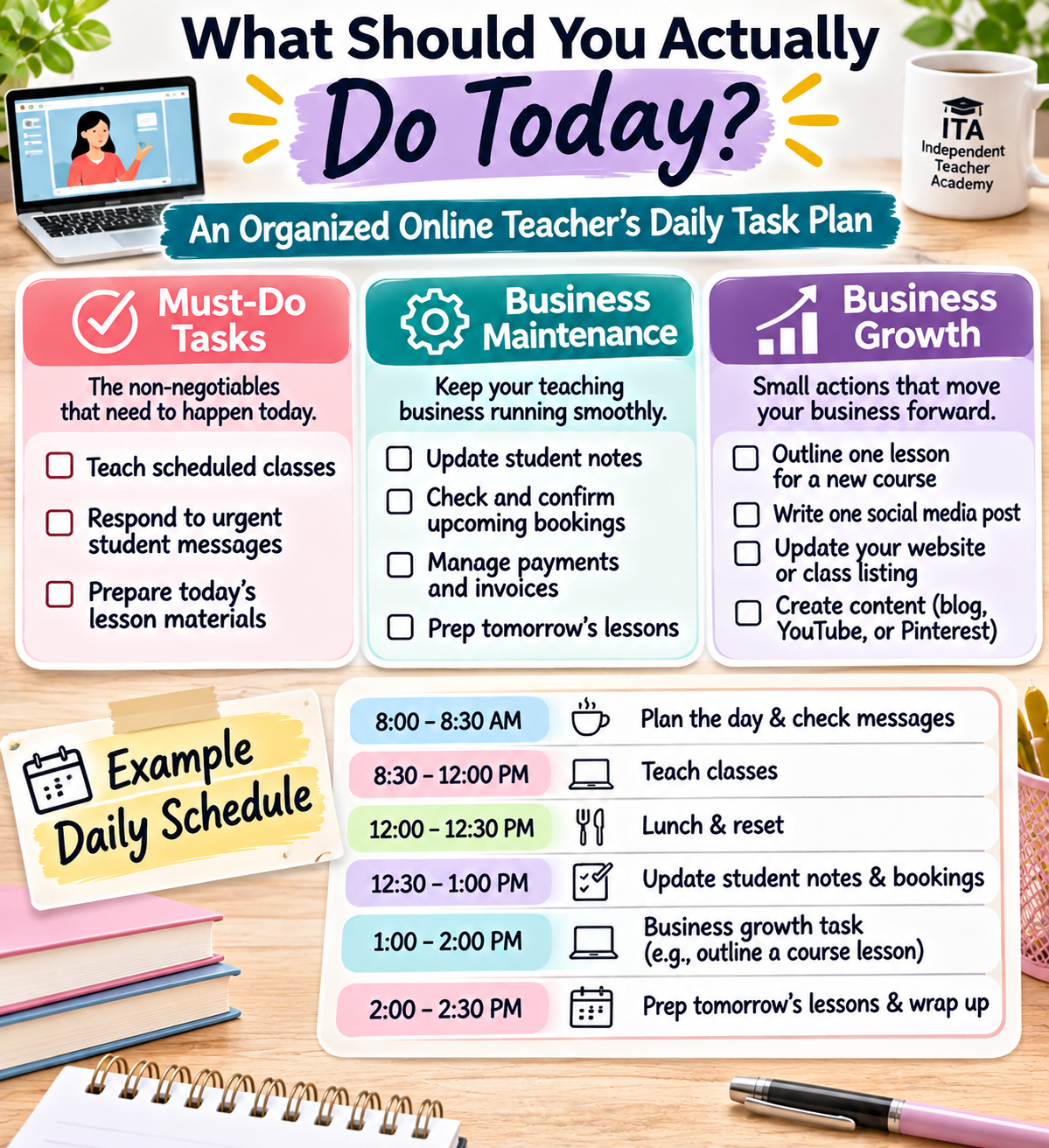
If you’ve already scheduled six hours of classes, a plan to create an entire course and publish three blog posts today isn’t realistic. Sort your workload into three groups:
- Must-do: Teach booked classes and handle urgent student needs.
- Maintenance: Prepare lessons, answer messages, review invoices, and manage your calendar.
- Growth: Outline one course lesson, write one blog section, or post one useful marketing update.
For example, a manageable day might mean teaching four classes, replying to students, preparing tomorrow’s lessons, outlining one course lesson, and writing one promotional post. For more ideas on balancing the work, see Balancing Teaching and Business: Time Management Tips for Online Teachers.
8. Make Progress Even on Busy Teaching Days
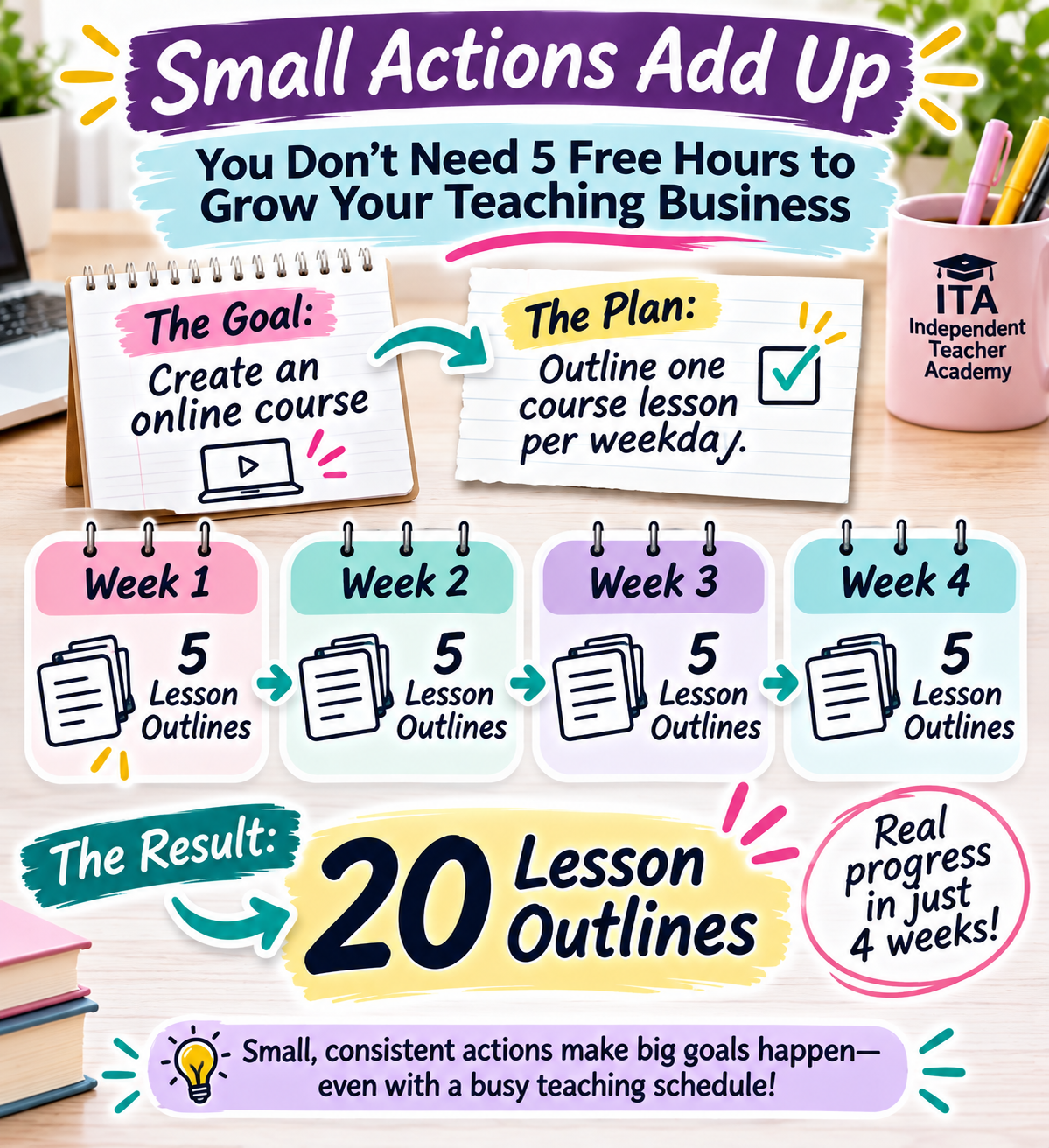
When teaching takes up most of your day, it’s tempting to tell yourself you’ll build your business when your schedule slows down. But short work sessions count. Ask: “What one small action can I complete today that moves this project forward?”
Maybe it’s outlining one lesson, writing the introduction to a blog post, or updating your website headline. Do one small thing consistently, and the progress adds up. Five lesson outlines per week could give you 20 outlines after four weeks.
9. Watch Our Conversation About Getting Organized
I recently discussed this challenge with Kelsey Gascon, a business owner, homesteader, and homeschooling mom balancing multiple responsibilities. We talked about having too much to do, the limits of long to-do lists, and using an index-card system to organize work into practical actions.
Although our conversation covered homesteading and business management, the ideas apply directly to online teachers managing students, family life, lesson preparation, and new projects.
10. Start With One Project, Not a Total Overhaul
Choose one project you’ve been putting off. Write down every action needed to complete it. Keep dividing large steps until each one feels specific and manageable. Then pick the next card or task and complete it.
You don’t need a longer to-do list or a perfect planning app. You need a system that tells you what action to take next and makes room for both your daily teaching responsibilities and your longer-term goals.
Final Thoughts: Your To-Do List Should Help You Take Action
Online teachers aren’t just teaching lessons; they’re often managing entire businesses. When “create a course” is written as though it’s a single chore, it’s no wonder the list feels overwhelming. Replace big, vague projects with small, visible actions and focus on what you can reasonably complete today.
Ready to replace the overwhelming list with manageable steps? Get started with the Free Index Card Challenge.
Affiliate disclosure: This post contains an affiliate link. I may earn a commission from qualifying purchases at no additional cost to you.
Post your Comment About This Product