
Have you ever thought of a great holiday-themed ESL class idea, only to realize you needed to start planning weeks earlier? Seasonal lessons can be wonderful opportunities to connect with students, but preparing the materials is only half the job. Teachers also need time to promote the class and give families a chance to book.
The Halloween ESL Class I Never Got Around to Creating
I’ve had plenty of moments when a great teaching idea came to me a little too late. One that sticks with me is a Halloween-themed ESL class I wanted to put together. Halloween vocabulary games, spooky reading activities, costume descriptions, and interactive speaking practice could have made a fun class.
But having a great class idea doesn’t help much if you never get around to creating and promoting it. By the time I thought seriously about putting everything together, the window for promoting a Halloween class was already closing. That meant potentially missing the chance to attract new families, offer something special to students, and introduce learners to regular lessons.
The lesson is simple: don’t wait until a holiday arrives to start planning your holiday classes.
Why Seasonal ESL Classes Are Worth Planning
Seasonal workshops can be one part of a bigger online teaching business. If you’re wondering whether online teaching can provide a real income, watch my video, Can You Earn a Living Teaching Online?, below.
A themed class gives prospective students a timely reason to try your teaching. For a closer look at seasonal demand, read the best months for online teachers to get bookings. A class such as “Halloween English Adventure: Learn English Through Spooky Games” may be more immediately engaging than a generic vocabulary lesson.
- Attract new students searching for a themed learning experience.
- Invite existing students to book an occasional extra lesson.
- Offer one-time workshops without requiring a long commitment.
- Create reusable lessons that can be refreshed each year.
- Give your blog, email list, and social media a natural seasonal topic.
You don’t need an entirely new curriculum. Start with an English skill you already teach—vocabulary, reading, speaking, or grammar—and build a seasonal theme around it.
1. Build a Seasonal ESL Teaching Calendar
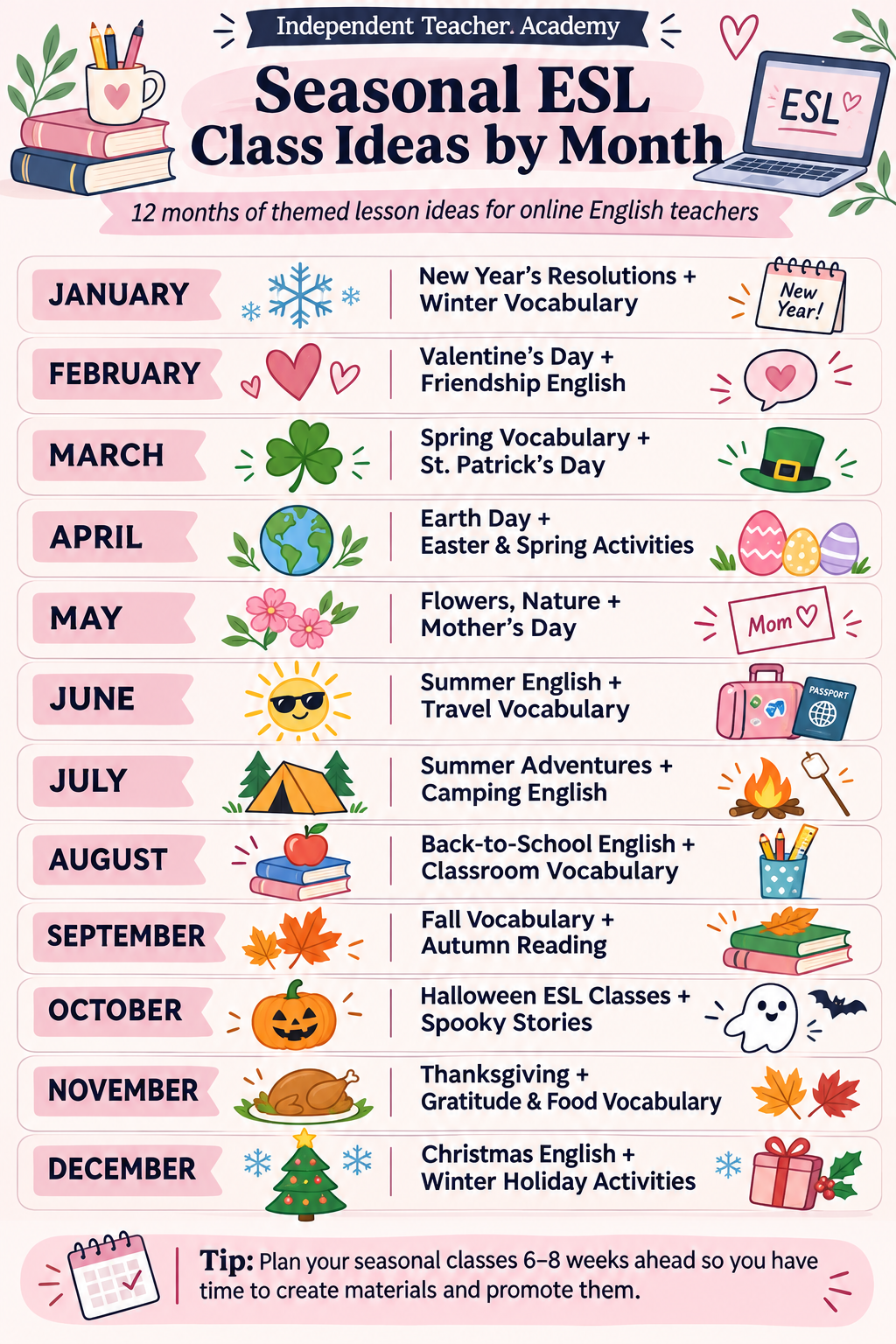
Make a simple annual calendar of potential offers. If you need a starting point for winter, explore what to teach in ESL classes in December. You don’t need a class for every holiday; choose three or four that suit your audience and your capacity.
| Month | Possible ESL Themes |
|---|---|
| January | New Year’s resolutions; winter vocabulary |
| February | Friendship; Valentine’s Day |
| March | Spring vocabulary; St. Patrick’s Day |
| April | Earth Day; spring activities |
| May | Nature; flowers; Mother’s Day |
| June | Travel English; summer activities |
| July | Camping; summer adventures |
| August | Back-to-school vocabulary |
| September | Autumn reading and conversation |
| October | Halloween vocabulary; spooky stories |
| November | Gratitude; food vocabulary |
| December | Winter holidays; New Year |
Adapt your calendar to students’ ages, countries, cultures, and interests. Not every holiday will be relevant to every family.
2. Work Backward Six to Eight Weeks
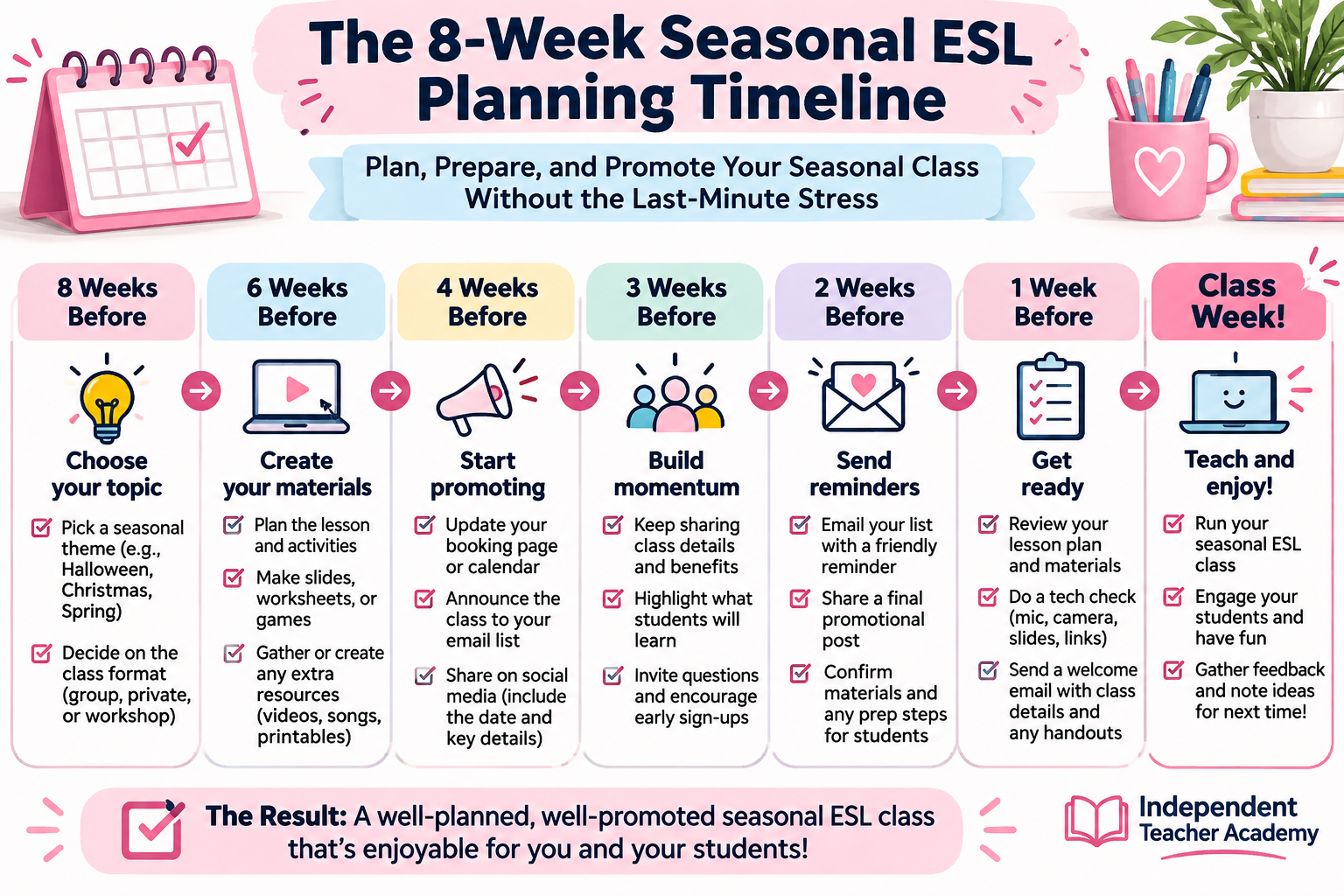
A class needs more than lesson slides. Build in enough time for a booking page, promotion, and reminders. For a Halloween workshop, for example:
- Eight weeks before: choose the theme, age group, level, learning objectives, format, and date.
- Six weeks before: create or adapt the lesson, games, and worksheets.
- Four weeks before: publish booking details and begin promoting.
- Two weeks before: remind interested families and existing students.
- After the class: record feedback and improvements for next year.
The exact schedule can vary. The important thing is to reserve time for marketing instead of treating it as an afterthought.
3. Make One Seasonal Lesson Work Harder
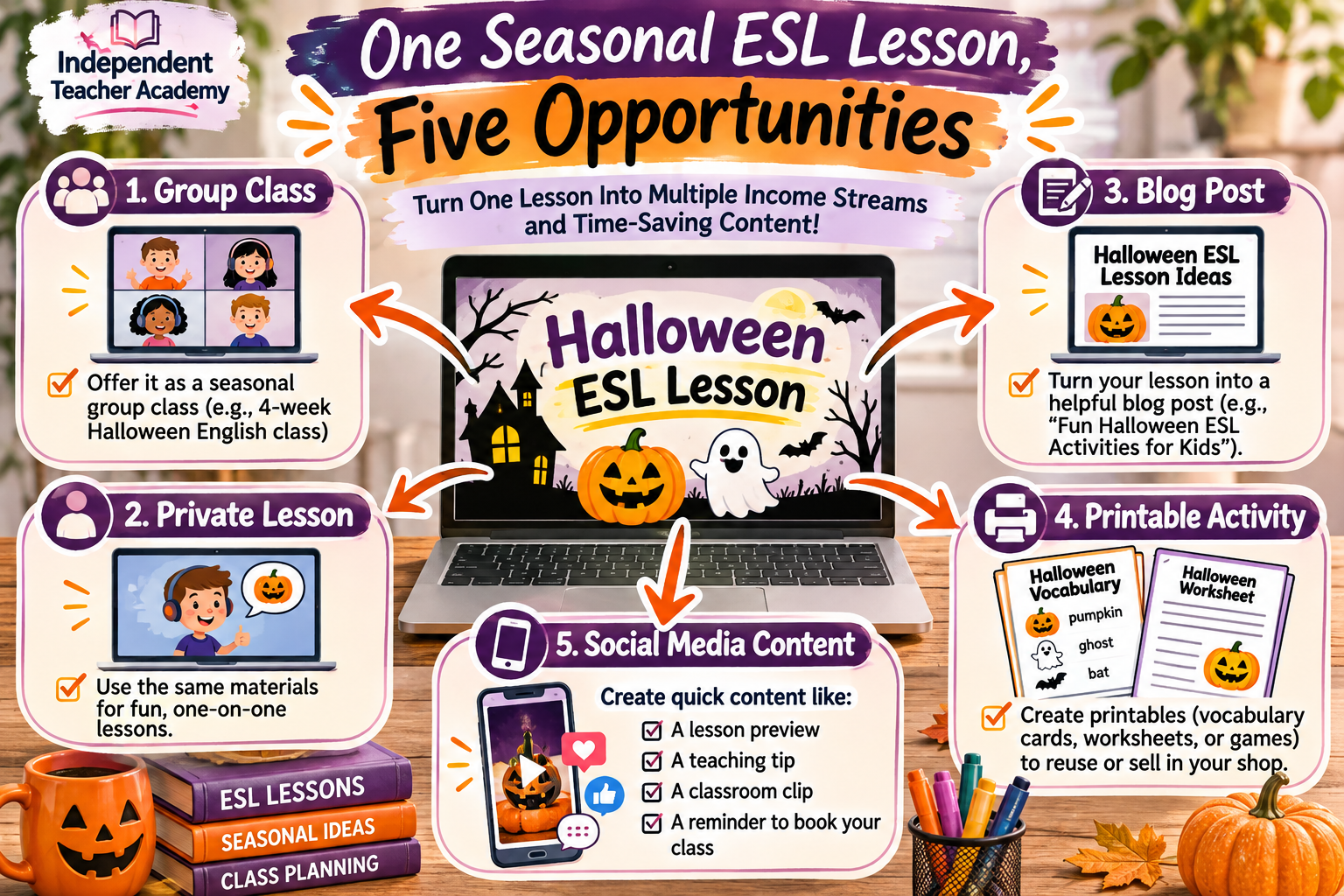
A single themed lesson can become a one-time small-group workshop, an adapted private lesson, a printable activity, a useful blog post, and several promotional posts. If you’re deciding how to structure seasonal workshops, see ongoing vs. fixed-date group classes. Save your lesson description and marketing materials so next year’s offer requires less work.
4. Break the Project Into Small Tasks
This is where an organization system can help. For more ways to simplify your workload, read why your to-do list isn’t working. I’ve been using the Index Card Challenge to organize projects and business tasks. Instead of one intimidating card saying “Create Halloween class,” I can break the idea into steps:
- Choose the age group and language level.
- Write three measurable learning objectives.
- Create the presentation, games, and practice activities.
- Decide pricing, available times, and booking details.
- Write the class description and create promotional graphics.
- Publish the booking page.
- Plan email and social media promotion.
- Schedule reminder posts.
- Review feedback and archive materials for reuse.
A calendar reminder in August to begin Halloween planning is much more useful than relying on remembering the idea in late October.
5. Keep the English-Learning Goal Clear
Cute graphics and holiday games are fun, but students still need a genuine language-learning experience. Make the educational outcomes specific enough to describe in the class listing.
Example: Halloween Costumes (Beginners)
Students learn ten seasonal vocabulary words, describe a costume, and practice simple sentences such as “I see a pumpkin.”
Example: Holiday Traditions (Intermediate)
Students learn celebration vocabulary, describe traditions, compare customs, and practice asking follow-up questions. Choose examples respectfully and make space for different experiences.
Example: Spring Nature Adventure (Young Learners)
Students identify seasonal words, practice descriptive adjectives, and speak about weather, plants, and animals.
6. Think About Marketing Before Building Everything
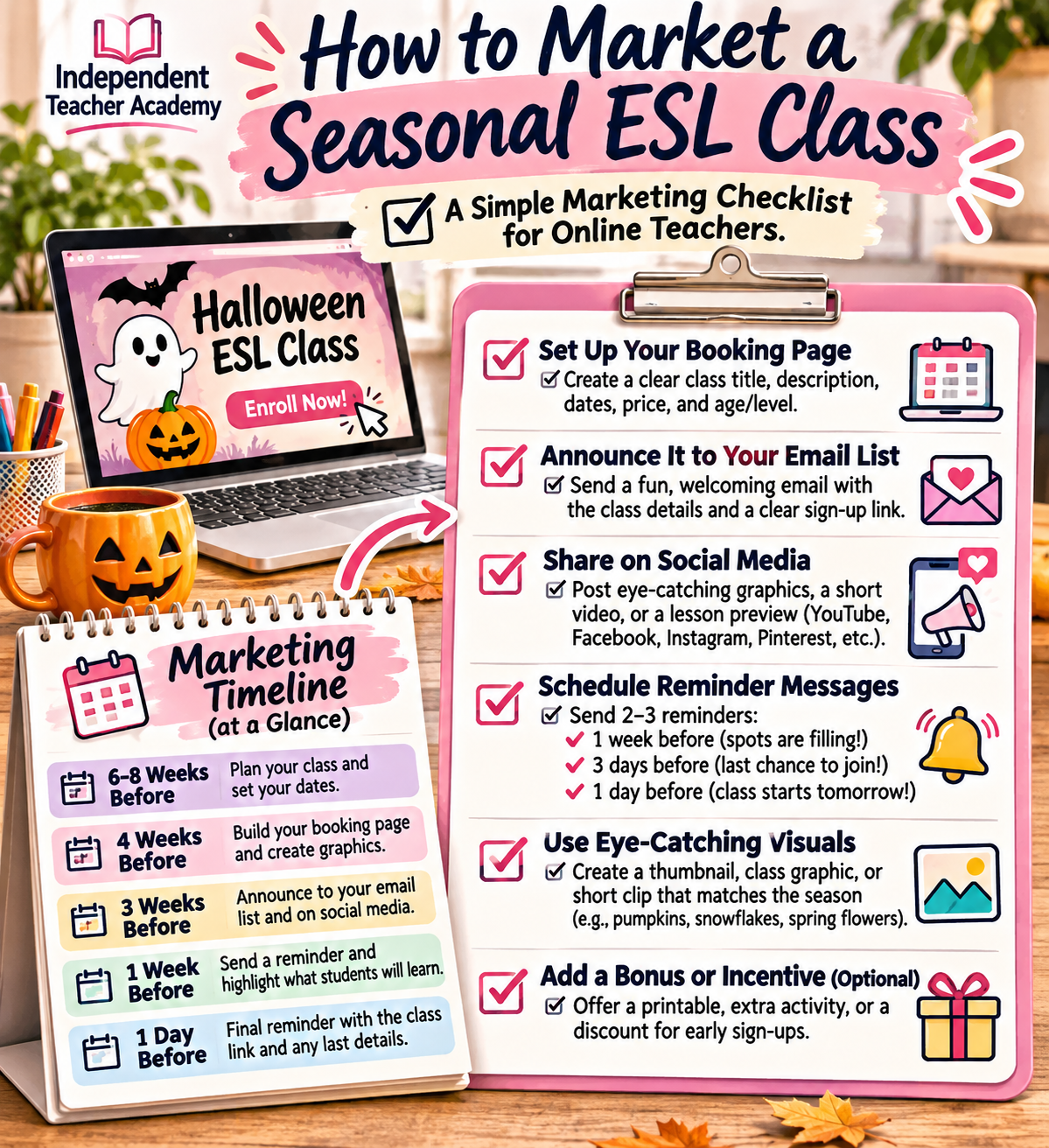
Before creating dozens of slides, ask: Who would book this? What will students learn? Where will families hear about it? How will they register? A clearly defined audience and registration process can help you avoid spending hours on an offer that has no practical way to reach students.
Use your teaching website, email list, blog, and appropriate social media channels. For a practical outreach approach, read how email marketing can help fill classes and a simple weekly marketing routine for online teachers. Build in enough lead time for people to discover the class and decide whether it’s right for them.
7. Create a Reusable Seasonal Lesson Library
Save the lesson presentation, worksheets, games, class listing, promotional graphics, email templates, and notes about what worked. For promotional inspiration, browse 50 content ideas for teachers. Organize everything in folders by season or holiday. Even a few reusable themed lessons can make future planning much easier.
8. Give Interested Students a Next Step
A one-time seasonal class can introduce families to your teaching approach. When appropriate, offer an easy next step, such as a regular lesson or information about future workshops. Only send promotional emails to people who have agreed to receive them.
9. Plan the Next Offer Now
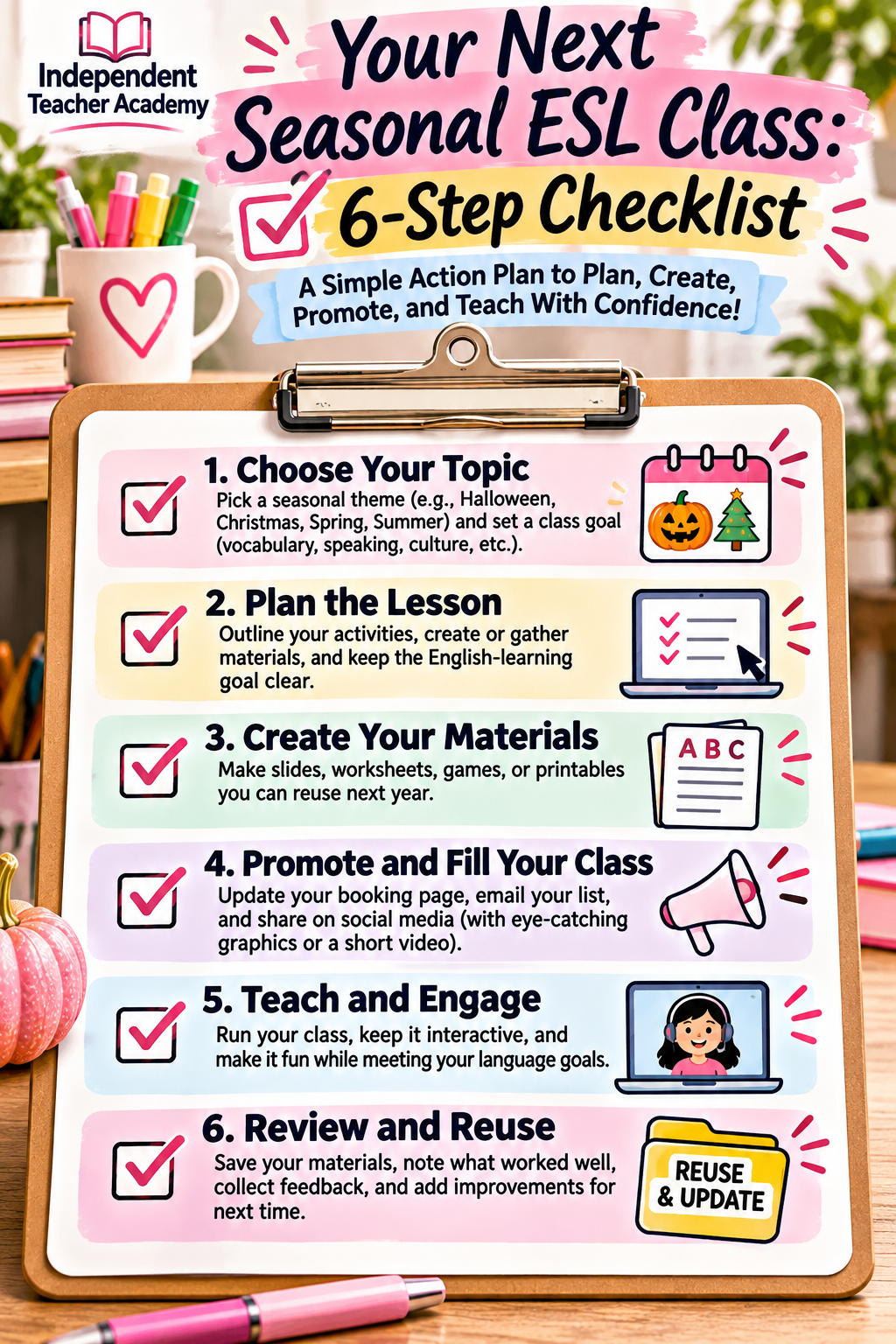
Choose one seasonal teaching opportunity, set a proposed class date, work backward, and put each preparation and marketing step on your calendar or index cards. You don’t need to be perfectly organized. You need a repeatable process that keeps a promising idea from slipping away.
Final Thoughts
The Halloween lesson I never got around to creating was a reminder that good teaching ideas need preparation and promotion to become real opportunities. Starting earlier gives you room to create a quality lesson, reach the right families, and make the most of the season.
Want to Get More Organized With Your Teaching Business?
If lesson ideas, content projects, and business tasks are piling up, the free Index Card Challenge offers a simple way to break big projects into manageable steps. Join the FREE Index Card Challenge here.
Affiliate disclosure: This post contains an affiliate link. I may earn a commission from qualifying purchases through my link, at no additional cost to you. The challenge is free to join.
Post your Comment About This Product