

Being an independent online teacher comes with plenty of benefits. You get to set your own schedule, choose your students, establish your rates, and build a business around your lifestyle. But there’s one aspect of running an independent teaching business that doesn’t always get enough attention: dealing with difficult parents.
Maybe a parent constantly requests last-minute schedule changes. Perhaps someone questions your methods, expects immediate progress, or sends messages late at night. Or maybe a parent sits beside their child during every lesson, answering questions before the student has a chance to speak.
When you teach through a company, support staff may handle these situations. As an independent teacher, you’re also the customer service representative, administrator, and business owner. The good news? You don’t have to choose between keeping families happy and protecting your boundaries.
Why Dealing With Parents Is Different for Independent Online Teachers
When you transition from a platform to running your own teaching business, your responsibilities change. You’re responsible for client expectations, policies, and professional relationships. And when you teach children, the parent pays for the lessons while the child receives the service. Those two people may have very different expectations.
One parent may want fluency within three months; another may prefer worksheets when you know their child needs more conversation practice. Often, these problems reflect mismatched expectations rather than bad intentions. Understanding this difference is the first step toward resolving them.
Parents’ expectations may also differ across families and markets. For more context, read What Parents in China, Europe, and Brazil Really Want from Online Teachers.
1. Set Clear Expectations Before the First Lesson
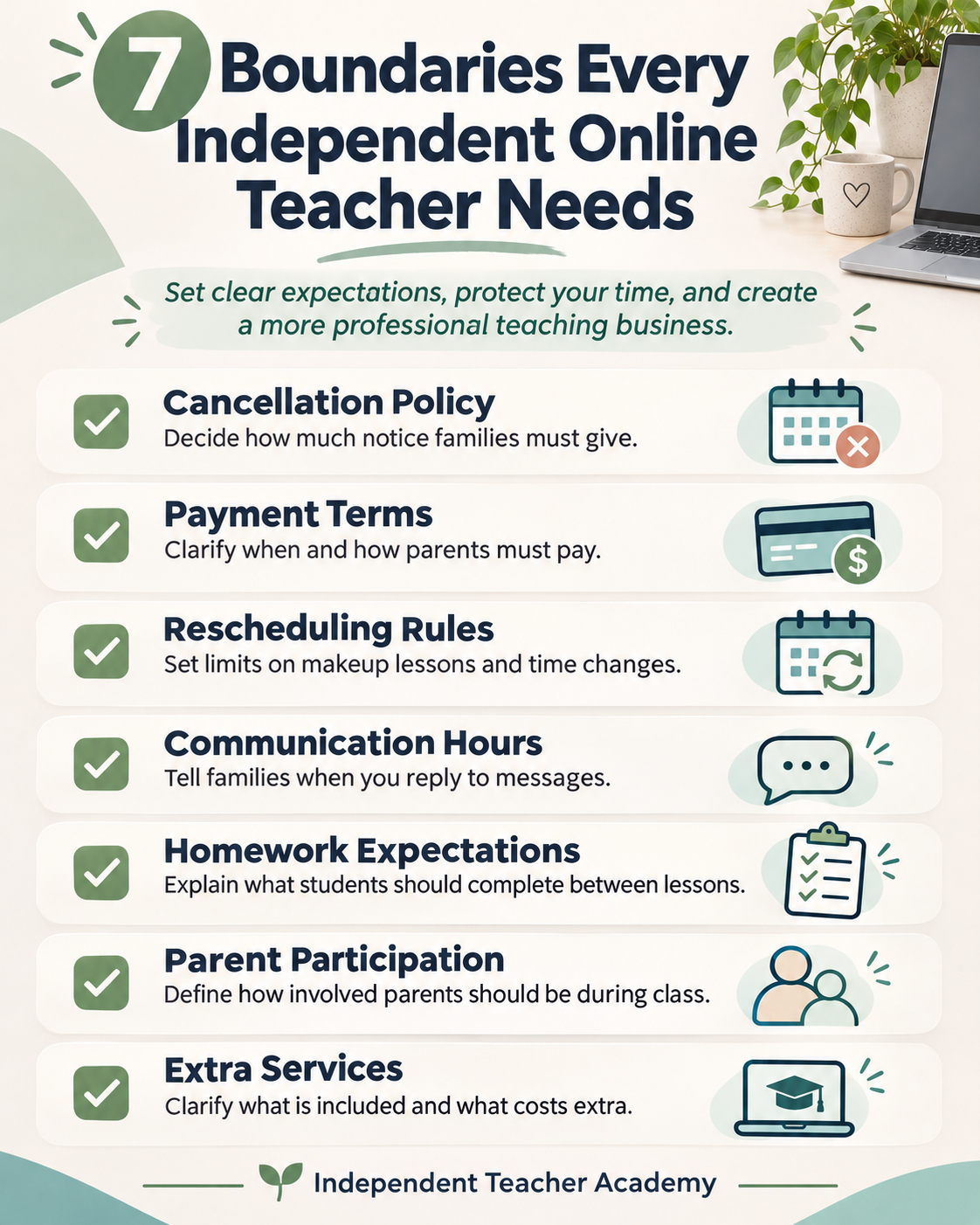
One of the best ways to handle difficult parents is to prevent misunderstandings before they begin. Before accepting a student, explain lesson length and frequency, scheduling, payments, cancellation and rescheduling policies, homework, progress updates, parent participation, and messaging hours.
Put those expectations in a written teaching agreement and ask parents to acknowledge them before purchasing lessons.
What to Say About Last-Minute Cancellations
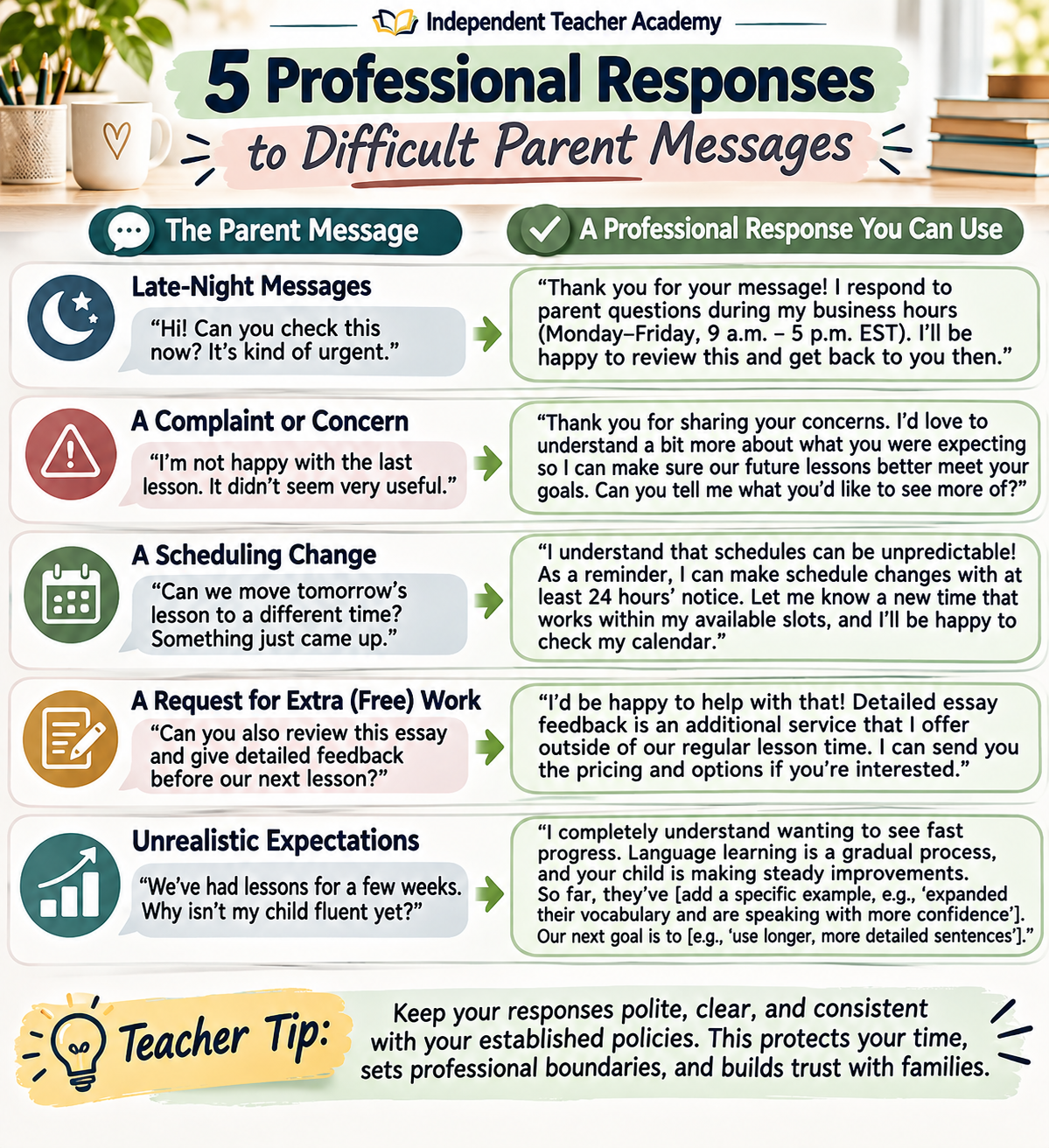
“Thank you for letting me know! I hope everything is okay. As outlined in my scheduling policy, lessons canceled with less than 24 hours’ notice are charged as scheduled. I look forward to seeing [Student’s Name] next time.”
This message is friendly but firm. You’re not apologizing for having a policy; you’re explaining the agreement already in place. If you’re still establishing your rates, see How Much Should You Charge for Your Online Classes?.
2. Handle Parents Who Expect Immediate Results
Parents understandably want their child to improve, but sometimes they expect progress faster than is realistic. You might hear, “Why isn’t my child fluent yet?” or “Can you guarantee they’ll pass their exam?”
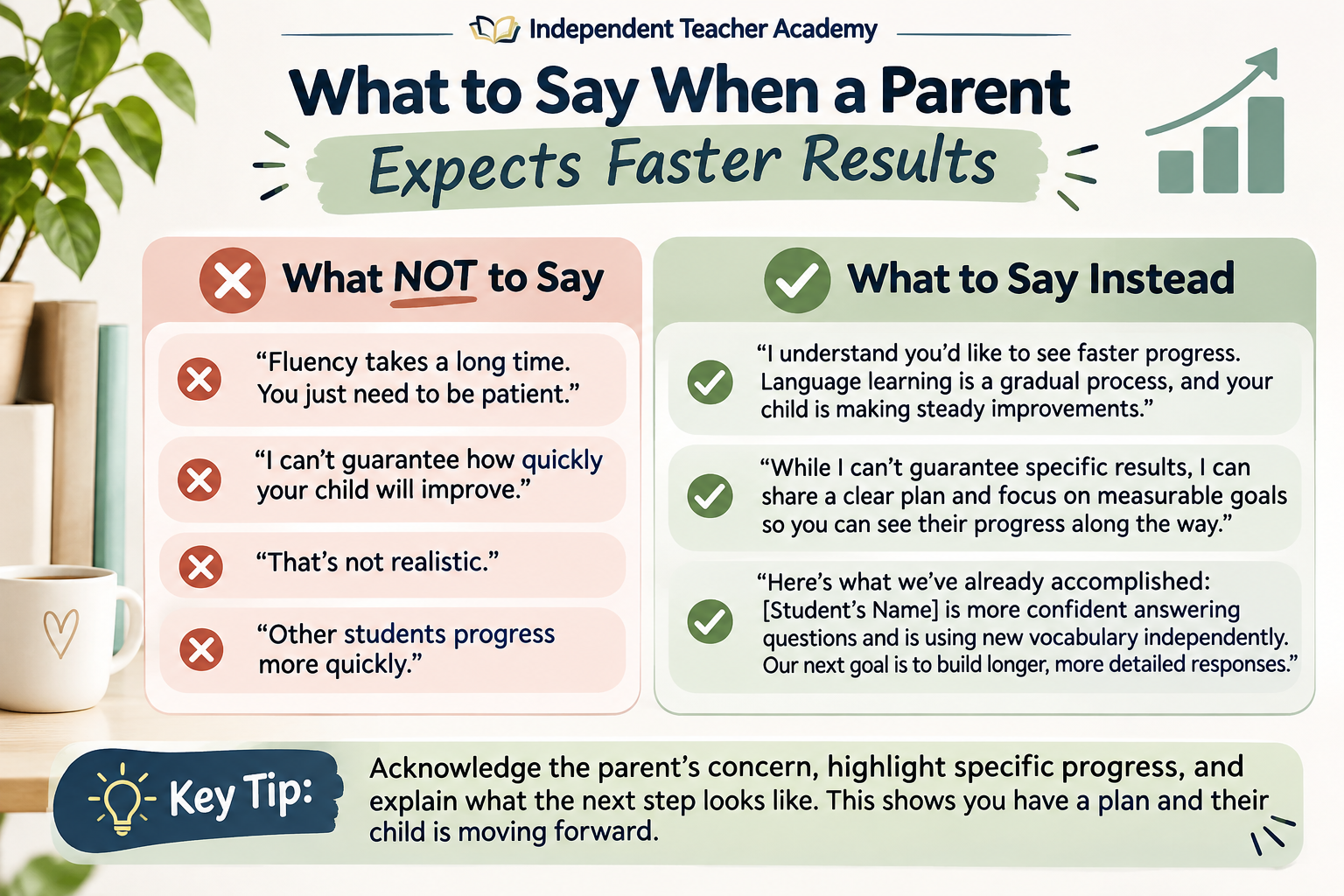
Instead of making promises about outcomes, identify achievable milestones: answering personal questions, using new vocabulary, speaking in fuller sentences, or participating with greater confidence. Show parents what progress looks like with specific examples.
What to Say When a Parent Wants Faster Progress
“I understand wanting to see progress. Language learning happens gradually, and each student develops at a different pace. Over the last four weeks, I’ve noticed that [Student’s Name] is answering questions more confidently and using vocabulary independently. Our next goal is to expand those responses into longer sentences.”
An initial assessment makes this conversation much easier. If you need help establishing a starting point, read What Should You Teach After an ESL Placement Test?.
3. Manage Parents Who Interrupt Online Lessons
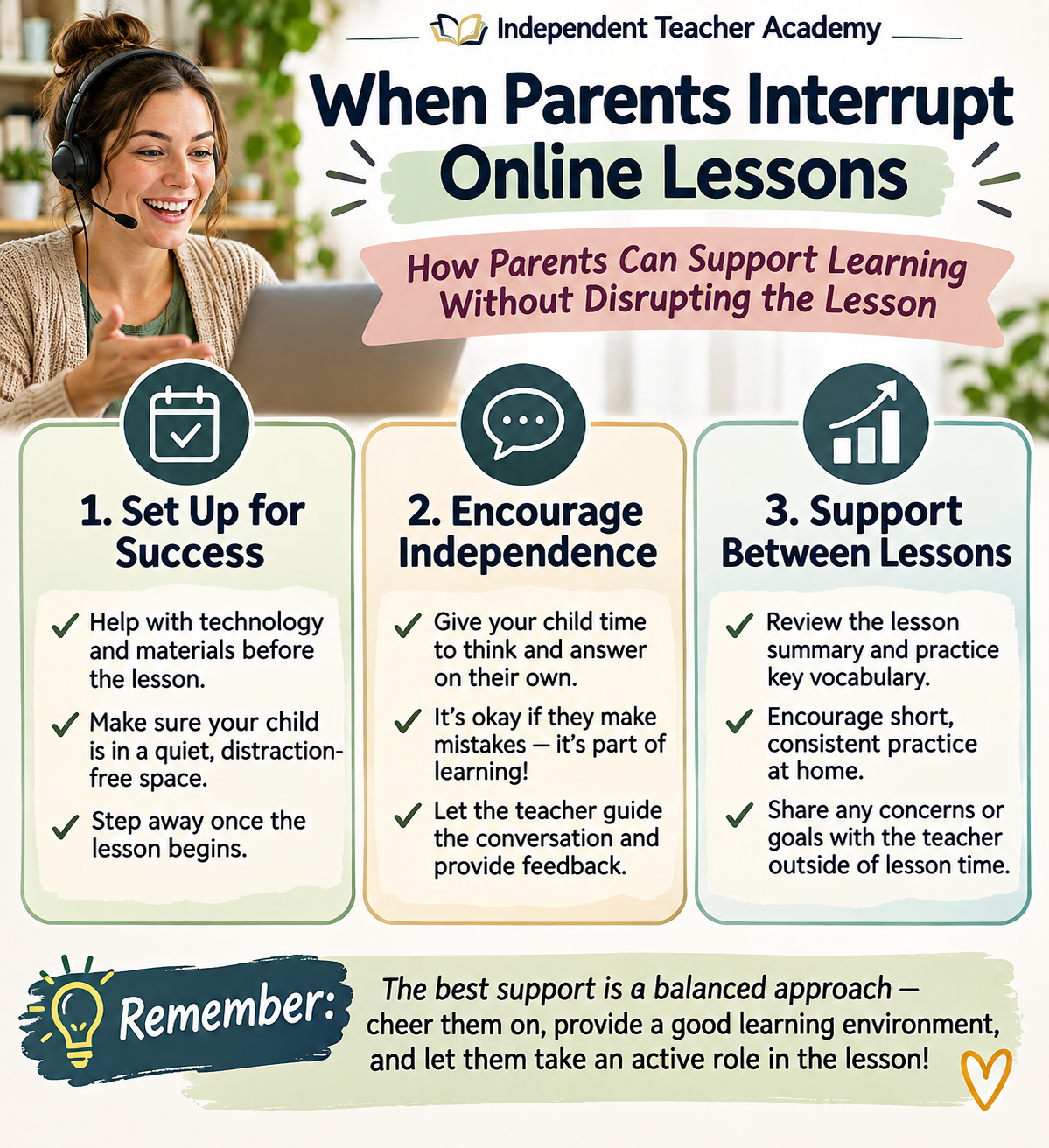
Some parents whisper answers, correct every mistake, or answer for the child. They usually mean well, but too much help makes it difficult to tell what the student can do independently.
What to Say to an Overly Involved Parent
“I love that you’re so involved in [Student’s Name]’s learning! During lessons, I’d like to give them time to think through answers independently, even when they aren’t sure. That helps me see what we need to practice and helps them build confidence.”
With younger children, parents can assist with technology at the start, then step back. For older students, try sharing a brief post-lesson summary instead of having a parent participate throughout.
4. Deal With Parents Who Constantly Reschedule Lessons
Frequent scheduling changes can make an independent teaching business difficult to manage. A parent may change times every week, request unlimited makeup lessons, or arrive late while expecting the full session.
Consider set weekly slots, a notice period for cancellations, limits on makeup lessons, advance payment, and a calendar showing actual availability.
What to Say to a Frequent Rescheduler
“I understand schedules get busy! To provide consistent lessons for everyone, I’m using a more structured scheduling system. Going forward, we’ll need to keep our regular lesson time or make changes at least 24 hours in advance.”
Booking software may help enforce your rules consistently. See LunaCal Review: Schedule Classes and Accept Payments for one scheduling option.
5. Respond to Parents Who Question Your Teaching Methods
Some parents want worksheets, others prefer conversation, and others compare you with another teacher. Before reacting defensively, ask what specific skill concerns them and what they’d like to see change.
What to Say When a Parent Questions Your Approach
“That’s a great question! I use interactive speaking activities so students can apply vocabulary and grammar in real conversations. We also work on accuracy, but I want [Student’s Name] to be able to use what they learn outside class.”
Stay open to useful feedback without abandoning your professional judgment. A curriculum aligned with student needs also makes your approach easier to explain. Read Creating a Curriculum Parents Actually Want to Buy for more ideas.
6. Establish Communication Boundaries With Parents
Teaching independently doesn’t mean being available around the clock. Parents may use email, WhatsApp, Messenger, or another app, and messages can arrive during dinner or late at night.
Choose one main communication channel, define business hours, and tell families when they can expect a reply.
What to Say About Messages Outside Business Hours
“Thank you for your message! I respond to parent questions during my regular business hours, Monday through Friday. I’ll review your question and get back to you during that time.”
Keeping communications organized is part of running a sustainable business. For a wider workflow, see How to Organize Your Online Teaching Business When You Have Too Much to Do.
7. Handle Parents Who Request Extra Work Without Paying
Reviewing an essay outside class, preparing custom worksheets, or writing extensive assessments can sound like a small favor, but these tasks add up. Define what’s included in the lesson fee and which services are separate add-ons.
What to Say About Extra Requests
“I’d be happy to help with that! Reviewing additional written assignments is an add-on service I offer. I can send over the pricing and explain how it works if you’re interested.”
Your expertise and preparation time have value—not just the minutes you spend on a video call.
8. Respond Professionally to Angry or Disrespectful Parents
Occasionally, a parent becomes angry, makes accusations, or communicates disrespectfully. Don’t reply while frustrated. Review the facts, check attendance and payment records, and keep significant communication in writing.
What to Say During a Disagreement
“I understand you’re frustrated, and I’d like to resolve this professionally. Our lesson was scheduled for Tuesday at 4 p.m., and I received the cancellation request at 3:30 p.m. My policy requires 24 hours’ notice. I’m happy to discuss options for future scheduling so we can avoid this situation again.”
After an important phone or video conversation, send a brief written summary of what was agreed. You can be calm without accepting abusive behavior.
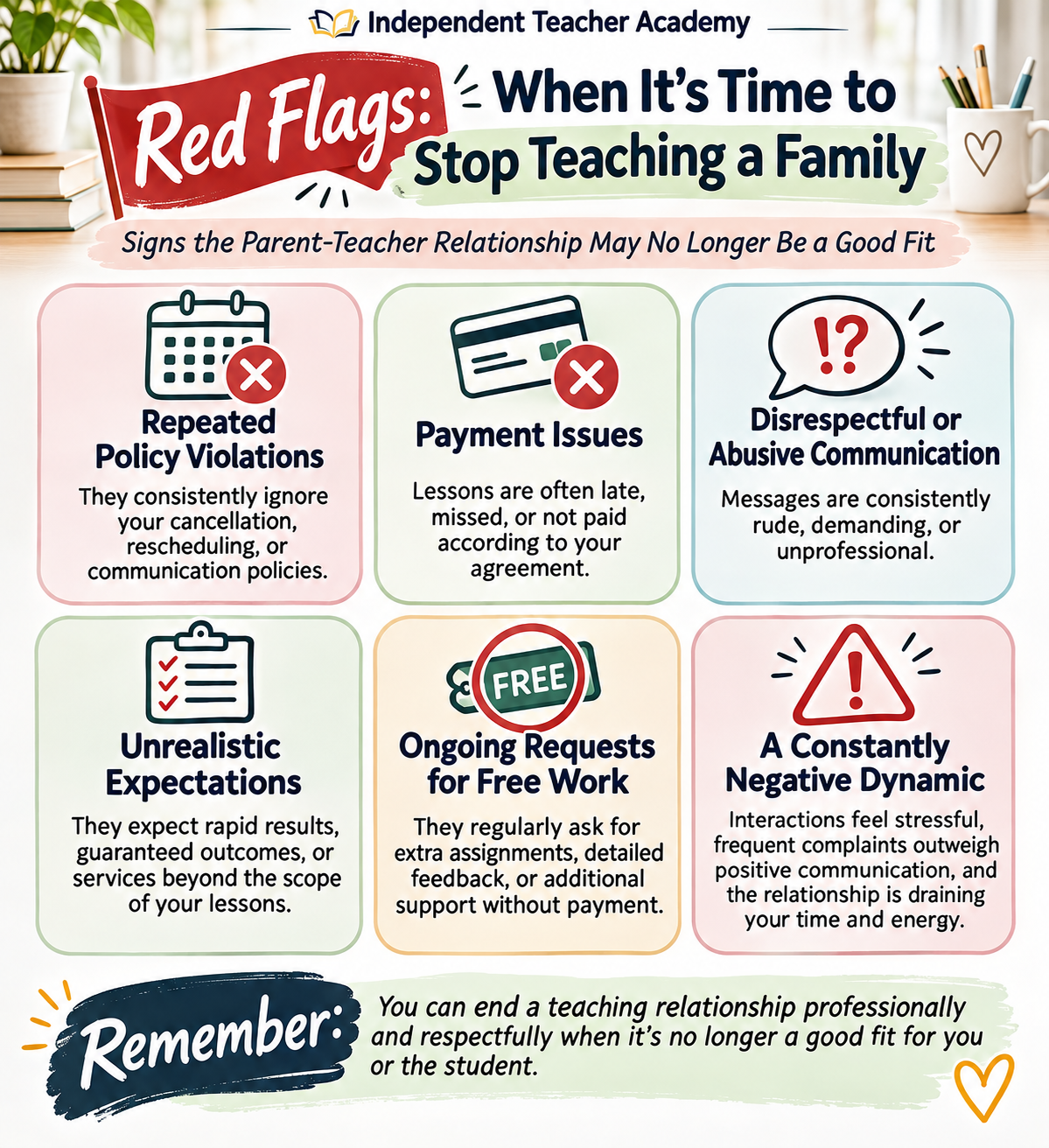
9. Recognize When a Teaching Relationship Isn’t a Good Fit
Independent teachers can decide which clients to work with, subject to applicable laws and agreements. Persistent late payments, repeated policy violations, demands for unpaid work, or abusive messages may signal an unsustainable arrangement.
Review your teaching agreement and any refund or notice obligations before ending services.
What to Say When Ending a Teaching Relationship
“Thank you for allowing me to work with [Student’s Name]. After reviewing our arrangement, I don’t believe my services are the best fit for your family’s needs moving forward. Our final lesson will be on [Date], in accordance with our agreement. I’ll provide a summary of the skills we’ve covered to support the transition.”
It can help to think like a business owner, not just as a classroom teacher. Read The Difference Between a Teacher and a CEO: Making the Mindset Shift.
10. Prevent Difficult Parent Situations With Better Onboarding
A strong onboarding process reduces confusion and helps you identify whether a family is a good fit before you commit.
Parent Onboarding Checklist for Independent Online Teachers
- Discuss the student’s goals and conduct a needs assessment.
- Explain your teaching style and realistic learning expectations.
- Confirm lesson length, frequency, pricing, and payment terms.
- Share cancellation, rescheduling, and refund policies.
- Clarify homework, parent participation, and feedback.
- Set communication hours and response-time expectations.
- Share an early progress update during the first month.
- Revisit goals and policies periodically.
A consistent process makes the experience feel professional and helps families trust you. You can read How Jay and Nicole Saved Their Sanity with Notion After Onboarding 30+ Students for another perspective on organizing student onboarding.
How to Build Positive Relationships With Parents
Communicate Proactively
Don’t wait for a parent to ask whether their child is improving. Send brief updates on strengths, challenges, and what’s coming next.
Celebrate Small Wins
A shy student answering independently or remembering vocabulary from last week is progress worth mentioning. Parents can’t always see the subtle improvements that teachers notice.
Be Consistent
Deliver lessons as promised, apply policies fairly, and communicate professionally. Consistency builds trust, making hard conversations easier.
Frequently Asked Questions About Difficult Parents in Online Teaching
How do I politely ask a parent to stop interrupting?
Explain that independent responses help you accurately assess the child’s learning. Acknowledge their desire to help, and offer a supportive role that doesn’t take over the lesson.
What if a parent refuses to pay for a missed lesson?
Refer to the cancellation terms they acknowledged, explain the charge calmly, and keep documentation. If disputes continue, reassess whether the relationship is sustainable.
Should independent online teachers offer refunds?
Have a clear, fair refund policy that complies with applicable laws and payment-provider requirements. Explain what happens with unused prepaid lessons and when either party ends the arrangement.
How often should I update parents?
Choose a schedule that matches student needs and your workload. Some families appreciate a quick note after each lesson; others prefer monthly summaries.
Can I stop teaching a child because of a difficult parent?
You may be able to end a client relationship, subject to applicable laws and contractual obligations. Provide any required notice, honor refunds owed, and handle the transition professionally.
How do I avoid these problems when enrolling new students?
Start with a consultation, clarify learning goals, explain your approach, and provide written policies before accepting payment.
Final Thoughts: You Can Be a Great Teacher and Still Have Boundaries
Handling challenging parent relationships is part of teaching children, but independence means you’re also responsible for setting the terms of your business. Clear expectations, realistic goals, written policies, and consistent communication can prevent many problems before they start.
You can be compassionate without being a pushover. You can be flexible without being available around the clock. And you can be an excellent teacher while protecting the business you’ve worked hard to build.
Ready to Build an Online Teaching Business With More Confidence?
Strong boundaries are easier to maintain when you have strong business systems. If you’re ready to attract students, communicate your value, and create a more professional enrollment experience, explore Enroll and Grow: Build Your Online Teaching Business from Independent Teacher Academy.
Learn how to take the next steps toward building a teaching business that’s organized, sustainable, and designed around your goals.
Post your Comment About This Product